










































Development Communication in Polio Eradication: Evolved and Succeeded?
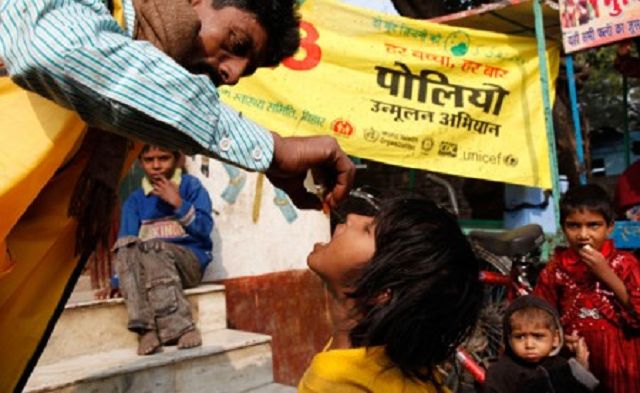
"Effective Communication is certainly the only most powerful 'vaccine' that prevents communities from various dreaded diseases, including Polio..."
Published as part of a series of papers from the Indian Association of Parliamentarians on Population & Development (IAPPD), this document explores the use of communication strategies as part of the polio eradication programme in India with the goal of sharing lessons learned with practitioners engaged in the effort to address other health issues in this country and elsewhere. The context of the authors' reflections is the fact that, in the year 1995, India witnessed the start of Intensive Pulse Polio Immunization (IPPI), wherein children up to the age of 5 were given additional doses of Oral Polio Vaccine (OPV) irrespective of their then-immunisation status. While India "has been particularly hailed as a success as it saw innovative use of epidemiological data and application of multiple communication channels", the authors argue that use of communication in a strategic way was limited, as the entire effort was addressed by the public-sector immunisation teams in administering polio drops to children - meaning that communication was oriented around promoting/marketing the polio vaccine - rather than in imparting ample knowledge to communities on the causal factors that are responsible for the spread of the polio virus (e.g., low rates of routine immunisation (RI), poor sanitation, lack of clean drinking water, and poor nutrition).
In making this argument, the authors outline the history of the polio eradication effort in India, such as the huge challenge of reaching the underserved and hard-to-reach populations (largely, the Muslim community) and the areas that had families at high-risk of polio-virus infection due to poor access to health, sanitation, and other basic services. These groups also included nomads, migratory population groups, and those migrants from the high-endemic States who stay in sub-urban clusters of other State Capitals (livelihoods being the major reason). Addressing this challenge gave birth to the term "social mobilisation" in this programme, which was included in the overall communication approach for polio eradication and became the crucial support to the programme in India. "In the apparent absence of any trained and dedicated 'communication cadre' with the Government to carry such a momentous task of effective inter-personal communication and social mobilization tasks at the field level all across India, especially with a greater focus on endemic and high-risk States, a huge social network was created with the local health staff of districts." Communication approaches are outlined, such as active engagement with influential Muslim institutions, folk media, and mass media campaigns (e.g., involving movie and cricket stars and key regional- and national-level political figures focused on dispelling rumours about the OPV and encouraging people to have their children vaccinated).
With the belief that "the strategic and innovative polio communication can contribute for other public health programmes and initiatives including reaching out to the poor", the authors offer these guiding elements (footnote numbers have been removed):
- "Development of area-specific and tailor-made communication interventions and selection of communication channels based on epidemiological, social and behavioral data of the affected population;
- Extensive use of interpersonal communication and social mobilization at all levels to improve the outreach and enhance the effectiveness of the programme;
- Pro-active inclusion of community leaders, Panchayti raj institutions, religious spokespersons, local communication, folk based media and building relationships with families and community members and engaging them for the success of the programme;
- Effectively using trained and skilled plus effective communication-workers to reach every house hold;
- Well designed enter-educate approach (entertainment based information message-packaging) connect with communities better, hence such formats carry higher reach, recall & reiteration value;
- Primary content of the communication must include 'benefit-message' (what direct tangible gain would reach an individual/family with a 'changed behavior');
- Intense grassroots level social mobilization to reach out to the marginalized communities; and
- Addressing social/gender inequities in improving interpersonal communication and increasing access to hard-to-reach groups."
The authors also describe the polio campaign as a good example of the integration of data-driven communication programmes with operational work. They suggest that the policy community base development/health communication around empirical findings. They conclude by reiterating their claim that the demand-based generation strategy for polio "while [it] ensured enhanced use of polio vaccines but majority of the communities - despite wide exposure to Polio communication content (both, through mass-media and IPC), even now, are unable to relate with the causes of polio spread. Hence, they miss out on adhering to a complete prevention cover."
Click here for the 6-page paper in PDF format.
To contact Anusha Agarwal: anushaagarwal2791@gmail.com
Email from Anusha Agarwal to The Communication Initiative on February 21 2014. Image credit: Gates Foundation, Flickr
- Log in to post comments