










































Kande Ni Bayra Community Radio Listeners' Clubs

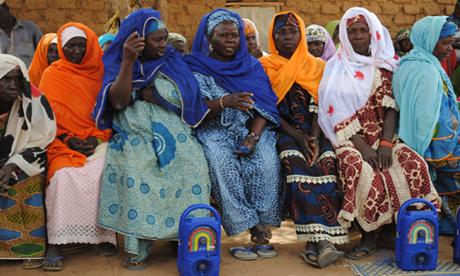
Three radio listeners' clubs were created in each of the 10 beneficiary villages. The listening clubs consist of women and young people; they gather at community literacy centres. Each club has a solar-powered and wind-up radio, and a woman is appointed to chair the club. The women and young people listen to and discuss the radio programmes, which often include voices and interviews from others in their villages. Topics covered in the radio programmes include health, education, livestock and crop farming, cooking recipes, decentralisation, citizenship, and promoting a culture of peace.
During these exchanges, the women are supported by either a radio extension worker, a literacy trainer, or a resource person who regularly visits the groups to facilitate discussion and to encourage the women to use the radio to speak out on issues. The group produces a summary of the discussions and, if the subject discussed is of interest beyond the village, it is recorded and broadcast by the community radio station. Organisers say that the women sometimes invite the men to share their opinions. To further broaden their scope, the village's 3 clubs meet from time to time and sometimes these meetings are broadcast on the radio.
According to the organisers, as the debates and discussion between women are used, discussed, broadcast, and listened to by other women in neighbouring villages, the women's groups are interacting and exchanging views. This in turn strengthens and develops rural women's leadership. In some villages, mixed-gender groups are not an option for the immediate future. In these cases, men form their own radio listeners' clubs in partnership with the women's clubs.
Agriculture, Gender
This project is the result of a sub-regional workshop organised by Dimitra and ONG-VIE Kande Ni Bayra in December 2006. The workshop emphasised the potential impact of creating synergies between literacy centres and community radio stations.
Dimitra, ONG-VIE Kande Ni Bayra, FAO, United Nations Development Programme (UNDP), United Nations Development Fund for Women (UNIFEM).
Dimitra newsletter [PDF] No. 17, November 2009; and FAO website, January 31 2011.
- Log in to post comments