










































Respect?: Evaluation Report
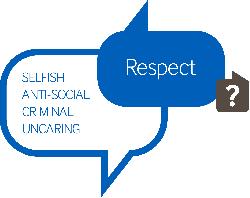
This report documents the practical process of involving young people in the Respect? campaign, which was launched to urge United Kingdom (UK)'s young people to use new technologies to take ownership of the media, and to make their opinions heard. An independent evaluation was commissioned to examine the practical way in which young people have been involved in the campaign and to capture the good practice which has emerged, including how they were recruited, what they contributed, how they were supported, how their interest was maintained, and what they themselves got out of it.
The initial sections of the report explore the strategies that informed the creation of the Respect Young Peoples Advisory Group (RYPAG), which was launched in 2005 and led by young people aged 16 to 24 with support from YouthNet and the British Youth Council (BYC). As detailed here, the members discuss, plan, and support the development of the campaign - both online and by regular telephone communication. They come to London from across the UK for monthly meetings with the team from BYC and YouthNet. In addition, they act as representatives and spokespeople for Respect? - attending events, talking to journalists and meeting Ministers of Parliament (MPs). They also influence friends and connect with other young people in order to promote the campaign message, often using online social networking facilities.
A key component of the Respect? campaign is engagement with the media. Following a day of media training and with the ongoing support of YouthNet and BYC, members of the RYPAG have been promoting the campaign and calling for fairer and more representative media coverage of young people. They provide case studies and take part in interviews with journalists. They publicise the Respect? message on television, on the BBC News Channel, and on the radio. They also generate publicity in print, both in local and national publications.
The young people acting as spokespeople to the media and to politicians have been supported in these ways:
- Media training: During a day of training, RYPAG members learned about taking part in media interviews, linking to key messages, and preparing for journalists' questions. The training also showed them how to facilitate interviews and identify opportunities to speak up publicly on the issue of the portrayal of young people in the media. In addition to serving as an incentive for many of the young people to get involved in the first place, a number of them considered it to be a sign that the campaign was serious, that they were valued, and that their contribution was genuinely required.
- Meetings: YouthNet and BYC made the practical arrangements for the RYPAG meetings, but RYPAG developed the agenda. The organisations ensured that those living outside London were not excluded from participating. It was suggested that an icebreaker at the start of meetings and increased opportunities for the members to socialise together would create an even stronger sense of team spirit.
- Communication with RYPAG members was mainly over email and telephone; group messages were coordinated and sent by YouthNet. The RYPAG members also developed several Respect? Facebook groups. "It was important to manage members' expectations about levels of communication....One of the young people suggested that a culture of regular communication needs to be instilled from the start of a campaign, to get people into the habit of replying to emails. It was felt that constant and consistent communication was key in retaining enthusiasm, interest and commitment."
- The young people noted that from the early stages of the Respect? campaign there was a clear plan, and everyone had a specific role, responsibility, or job to do, without them being overburdened. Having responsibility for a specific area of work was seen to be particularly helpful in demonstrating their experience to higher education providers and prospective employers.
- Members were consulted at all stages of the campaign. Their input was also sought on all aspects of the development of campaign materials. For the exercise to be worthwhile and not tokenistic or patronising, input needed to be meaningful and the young people involved to their full potential. There were a variety of ways members could participate, from commenting on a document over email to meeting with journalists.
- BYC and YouthNet were keen to ensure that the RYPAG members were aware of how important their contribution was. Members suggested that the way in which they were made to feel valued ranged from simple informal acknowledgement to more official recognition, such as: being thanked, being asked for ideas and opinions, receiving feedback on their contribution, having their travel and accommodation arranged and paid for, and/or being nominated for an achievement award.
- "Members suggested that seeing the campaign develop from a lobbying initiative to a grass roots mobilisation campaign, and seeing their expertise within that grow, was highly motivational....During the evaluation, young people suggested that it was helpful and motivating to have a clear plan in place, where they were assigned and were accountable for specific tasks which contributed to the wider remit of the campaign. It was felt that it was important to see the practical outcomes of the plans."
What the young people got out of it:
- The experience of speaking to the media reportedly has given them communication skills which they would also be able to apply in other contexts, such as speaking to different audiences and stakeholders, including senior people, decision-makers, and policy makers, both as campaigners and in their future careers. It was felt these skills would also benefit their local community involvement.
- Some of the young people felt that being involved in Respect? had significantly improved their understanding of the way in which different institutes, bodies, and initiatives work and can be influenced. With increased awareness came a realisation of further opportunities and options, both for their own careers and for other campaigns and volunteering work.
- RYPAG members suggested that the experience they had gained, the skills they had acquired, and their achievements had greatly increased their self-esteem. The media training was thought to be a key factor in increasing individuals' confidence in talking to people and ensuring their point of view was delivered.
The evaluation concludes that "The involvement of young people in Respect? ensured the campaign was led by young people's ideas, and was therefore able to identify and truly focus on the current needs of young people. Taking into account their own experiences, and those of their contemporaries, the members were able to tap into the views of young people across the UK, who felt misrepresented by politics and the media. The members' ideas were integral to maintaining the campaign's relevance....Ensuring those young people realised their value, both as the advocates for their peer group and as volunteers, has been an important reason that many members who were recruited to the RYPAG in 2005 remain active and committed members in 2009."
Page 25 of the document features a series of "top tips for involving young people in campaigning"; it is intended for other organisations wanting to benefit from involving young people in their activities. To cite one: "Many young people have a lot going on in their lives, so they appreciate regular communication to keep them informed and enthused. Use what works for them, such as email, phone calls, text messages, MSN messenger, Skype or social networking sites like Facebook or Bebo."
"Charities Encourage Young People to Promote Positive Images", by Ruth Smith, Children & Young People (CYP) Now, August 25 2009 - forwarded to the Young People's Media Network (YPMN) listserv on August 26 2009; and Respect? Campaign website, accessed on September 8 2009.
- Log in to post comments