










































Rural Women Reporting
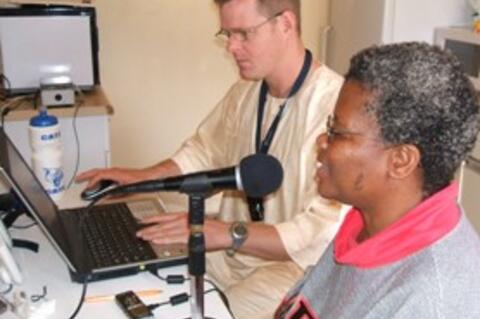
The project was based on week-long participatory workshops with members of rural women's groups in each of the three countries. In South Africa, CMFD and FAHAMU collaborated with the Rural Women's Movement/Indaba Africa; in Kenya with FAHAMU Kenya; and in Sierra Leone with Muloma Women's Development Association (MUWODA). According to the organisers, throughout each workshop, the emphasis was on participation and experiential learning. The process was based on the following key steps:
- Introduction: To give participants a sense of what could be done, different radio formats were demonstrated – news bulletin, reports, features, interviews, debates, etc. – and the group discussed what format they wanted to produce.
- Planning the Programme: Participants discussed and prioritised issues they wanted to cover. Topics were chosen based on individual participants' interests and experiences.
- Outlining the Programme: Participants outlined key issues within their topic, possible interviewees, and what research needed to be done. This plan was then presented to the group, who offered suggestions and guidance.
- Research: Participants spent an afternoon researching their topics. Those who were computer-literate helped those who were not.
- Skills Training: Participants were taught how to use the voice recorder and the basics of conducting an interview.
- Conducting Interviews: All participants went out to gather interviews. According to the organisers, it was difficult for many, but also an empowering experience.
- Scripting: Once interviews and research were gathered, participants learned about scripting, and worked with the facilitators to shape their ideas into a coherent report.
- Voicing and Editing: Each participant recorded her own narration and worked with the sound engineer to place interview clips. Translations were done as needed. Participants were able to hear their completed reports before the closing of the workshop.
- Distribution: Audio recordings were made available on all partner websites, as well as on a CD for use in organisations, radio stations, and informal listening sessions.
Topics from the three workshops cover a wide range of issues, including young women and employment, teenage pregnancy, forced/arranged and early marriages, women and inheritance rights, women in politics, pregnancy and access to health care, and community crime.
A total of 12 radio programmes were made with varying lengths and formats. For example, in South Africa, participants chose to each produce her own programme, while in Kenya, they decided to produce one large magazine programme, with each participant contributing a particular thematic segment. The programmes were made available to local radio stations and community groups, and were distributed over the internet as podcasts.
Women, Rights, Gender.
FAHAMU Networks for Social Justice, Community Media for Development (CMFD) Productions, Indaba Africa/ Rural Women’s Movement, FAHAMU Kenya, Muloma Women's Development Association.
CMFD website on August 15 2008 and August 28 2008.
- Log in to post comments