










































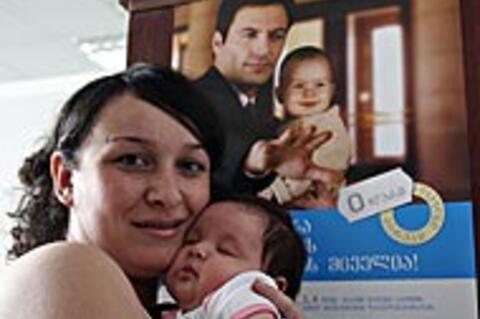
Timely Immunization is your Child's Bodyguard: Nationwide Campaign
This campaign drew on the communication for behaviour change (COMBI) approach, which is a social mobilisation process that blends strategically a variety of communication interventions intended to engage individuals and families in considering recommended healthy behaviours, and then encouraging the adoption and maintenance of those behaviours. COMBI is based on the conviction that having knowledge is not enough to stimulate sustained behavioural impact (someone doing something). It begins with a situational analysis that involves listening to people and learning about their perceptions and grasp of the offered behaviour, the factors which would constrain or facilitate adoption of the behaviour, and their sense of the costs (time, effort, money) in relation to their perception of value of the behaviour to their lives. In COMBI practice one is advised not to attempt communicating more than 3 behaviours at a time because people can usually remember only 3 items at a time; thus, organisers set the behavioural objective of focusing on the 2-3-4 schedule of vaccines.
Following a 4-day-long February 2007 COMBI training workshop, those involved in developing the campaign worked to set forth an integrated approach, with a selection of communication interventions appropriate to the behavioural outcome desired. This process was, in part, informed by a baseline study designed to investigate immunisation behaviour among health professionals and caregivers in order to develop a comprehensive understanding of the current communication/behavioural gaps. Next, a process of administrative mobilisation took place. Partnership was, in fact, a core strategy; for example, the Procter and Gamble Company donated Pampers wipes and money to reward mothers who take their children for immunisation (the money raised through this collaboration was used to vaccinate 5,000 additional infants through outreach vaccination sessions for children living in hard-to-reach areas or in the regions with lowest immunisation coverage).
The campaign focused heavily on interpersonal communication. Family nurses throughout the country carried out home visits to inform mothers and other caregivers about the benefits of immunisation and to advocate for timely vaccination. Recognition/reward was a core strategy for encouraging these nurses. A local bank awarded 100 nurses, who had achieved high immunisation coverage in their regions/districts, plastic cards with a value of GEL 100 (US$60).
Involving children in sparking behaviour change was another interpersonal approach and was based on the idea that they could serve as "personal sellers" of the immunisation messages in their homes. To educate children about the importance of timely vaccination, lessons were arranged in all schools across the country in April, and children received school calendars including information on immunisation.
There was also a media component consisting of both the use of information and communication technologies (ICTs) and printed materials. Four advertising segments, each lasting 3 to 4 weeks, were broadcast on the radio and on television in March, April, July and October. Talk shows, as well as a 12-minute-long film, focused on immunisation were aired on national and regional TV and radio stations. In addition, video-audio releases were produced. With regard to printed materials, media feature articles in major newspapers were released, and informative booklets, posters, and banners with campaign messages were produced and strategically posted at the entrance of each health facility where parents bring their children for immunisation.
Immunisation and Vaccines.
Organisers explain that "[i]t would not be advisable in a single public communication campaign to attempt to address all the behavioural outcomes expected under the general heading of immunisation, given the various vaccines and their scheduling. The public would simply be overwhelmed and confused. One needs to limit the behavioural focus if behavioural impact is desired. UNICEF/Georgia in discussion with its partners decided to focus on a critical set of vaccines which are best taken with fewer side effects if taken promptly and on schedule at 2 months ([diphtheria, pertussis, tetanus] (DPT) 1, [oral polio vaccine] (OPV) 1, [Hepatitis] (Hep B) 2), 3 months (DPT 2 and OPV 2), and 4 months (DPT 3, OPV 3, Hep B 3). While all vaccines are important, the medical view at UNICEF/Georgia was that focusing on getting the 2-3-4 month set of vaccines to 90% and above [from a baseline of approximately 84%] will make a tremendous difference to the protection of children's health in Georgia."
According to the impact evaluation study conducted in 2008, the campaign was successful. The level of knowledge of vaccine preventable diseases (VPD) amongst the general population increased by 17% from the baseline, and the timely vaccination coverage for the 3 targeted antigens increased on average by 16%. Adequate behaviour of mothers/caregivers was determined by increased awareness of immunisation and positive attitude towards immunisation.
The Ministry of Labour, Health and Social Affairs, and the Ministry of Education and Science - with the support of UNICEF/Georgia. The Local TBC Bank awarded successful nurses, and Procter and Gamble Company donated 15,000 boxes of disposable Pampers wipes for mothers who took their children for immunisation.
Emails from Maya Kurtsikidze to The Communication Initiative on February 11 2008 and June 18 2009; "Timely Immunization is your Child's Bodyguard: Nationwide communication campaign on Immunization in Georgia", sent from Maya Kurtsikidze to The Communication Initiative on August 31 2010; and UNICEF Georgia website, August 31 2010.
- Log in to post comments