










































Refuge Media Project
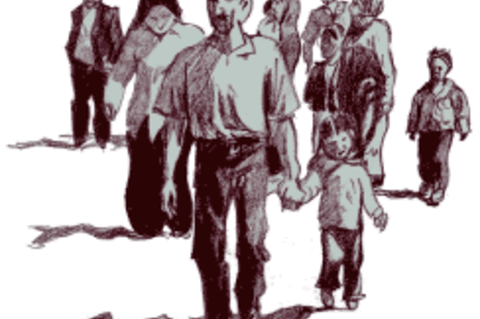
The Refuge Media Project draws centrally upon the use of film and the internet to share information about, inspire public understanding of, and mobilise change around the experiences of torture survivors and their families in our communities. These communication tools are also being used to the end of helping providers to recognise torture survivors among their immigrant clients, to demonstrate ways providers can effectively confront the issues that are unique to immigrant torture survivors, and to motivate, inspire, and empower clinicians and students to meet the needs of what organisers describe as a growing and increasingly vulnerable population.
Specifically, the film "Refuge: Caring for Survivors of Torture" will provide a forum for refugee torture survivors to speak to the healthcare community about their experiences as patients. The participation of members of this group, who have lived through the suffering that might otherwise be abstract, is designed to help address questions such as: What are the healthcare needs of this population? What have been the obstacles to their receiving appropriate and competent care? Have there been times when they have felt "re-victimised" by their healthcare encounters? How have they used their own healing traditions to relieve suffering and pain? What recommendations do they have for their providers? For those who are in the process of applying for political asylum in the United States, how does their legal status affect their access to healthcare? What are the particular obstacles to health-care for asylum seekers? What are the obstacles to care for immigrants who, for one reason or another, are in government detention? How can clinicians help and support asylum seekers and detainees?
In addition, the film will examine the experiences of healthcare and social service providers who work with survivors who have trauma-related conditions, addressing questions such as: What are the challenges to providing care, and what have been the barriers to effective intervention? What are the personal and professional factors that may sometimes prevent otherwise caring clinicians from responding appropriately? What is possible in a primary-care setting? What do specialists offer? What are the practical and ethical issues they face? What challenges do those seeking to help refugees who are in federal detention confront? What kind of communication is there among the care providers dealing with each case? How do refugees' own beliefs and healing traditions fit into the picture?
Collaborative, interpersonal interactions are core to this film production process. Refuge has worked with some of the country's major centres that providing treatment and other forms of support to torture survivors, as well as with local refuge organisations, health centres, and other groups working on these issues in order to include the voices of healthcare providers and torture survivors. It will also incorporate cinema verité footage of provider training sessions, real patient-provider encounters, and other documentary material.
The Refuge Media Project website is intended to serve as a complement to the film. It features various sources of information on issues related to both torture and immigration, as well as ideas for how to take action (and, when it is complete, how to purchase the film).
In addition, related in-person activities, such as a film screening and a discussion series for local health care providers working with survivors, are planned.
Human Rights.
Organisers estimate that more than 500,000 immigrants, refugees, and asylum seekers in the United States have been victims of politically motivated torture.
Emails from Ben Achtenberg to The Communication Initiative on February 5 2008 and April 25 2008; and the Refuge Media Project website.
- Log in to post comments