










































How to Report a Disease Outbreak or Pandemic
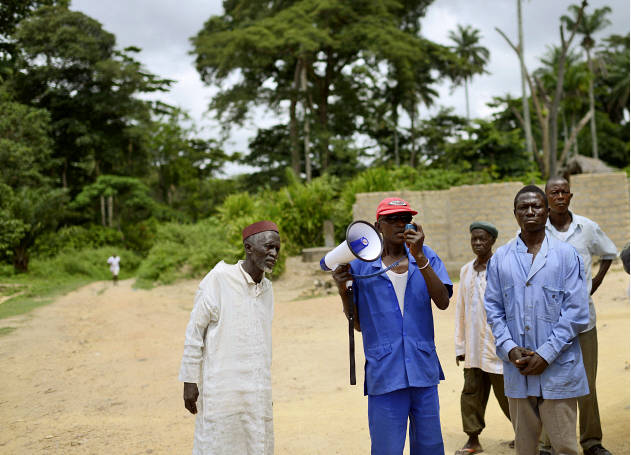
This SciDev.Net Practical Guide from 3 editors of Chinese news weeklies gives advice on how to avoid sensationalism when reporting disease outbreaks, particularly in developing countries, where, as indicated here, resources may be scarce and the challenges of communicating important information can be great. As stated here: "The initial stages of an outbreak, especially, provide good opportunities for journalists. There are many researchers and doctors to interview, an abundance of news 'hooks' as health officials and researchers deal with the situation, and an unusual readiness of editors to run science stories.... And this must always be done by applying critical thinking and taking a scientific approach. The science - together with the wider social and economic perspectives - is essential to producing good stories about pandemics...[R]esponsible public health messages are crucial to easing the burden of a disease on vulnerable health systems."
Tips include the following:
- "Get the basics right....First, give your audience the correct meaning of words they will frequently hear and read....Use straightforward, accurate explanations that are not alarming. Health organisations may provide information and factsheets about the pathogen and the best ways of dealing with it. Government agencies should provide information about the number of cases in a country and, if appropriate, the number of deaths.
- Key questions in the early stages [might be]: What do scientists know?....Say what scientists do and don't know but try not to cause panic. Scientists don't necessarily need all the details about a pathogen to find a treatment that works, and it is unrealistic to expect scientists to have information about every possible disease at their fingertips. How many cases will there be? How many people might die?....Be careful not to report predictions as certainties....So, always try to analyse the factors contributing to the estimates of death tolls - don't focus solely on the numbers. How is the infection passed on and what can I do about it?....State what is known about how the disease is spread and ask a scientist or public health official - or a range of them - to explain if transmission methods are unclear....You should also report how it isn't spread....You can give your audience information about how they can protect themselves, particularly with simple measures....Reporting what people shouldn't do can be almost as important....It is also important to avoid running too many stories. Important public health messages should not be lost because people are turned off by too many similar stories that don't seem to offer any new information.
- Build trust with sources. Using reliable and informative sources will make your stories stand out, as well as helping you navigate the plethora of data, some of which can be conflicting. Developing relationships with scientists who trust you is crucial. You can also return to the same sources to give you an idea of how the outbreak is perceived by scientists over time. If they are changing their minds about the severity of a disease then it is worth letting the public know. It is also a good idea to build relationships with government sources....
- The long-term view....Keep the key questions above in mind and try to see whether the answers have changed as new information comes to light; ...the time after an initial flurry of coverage is an opportunity for in-depth reporting....
- The wider context....Reporting on pandemics can mean dealing with social issues [and] economic implications....
- Think globally, act locally....Finally, a pandemic may appear remote to people far away from the first known outbreaks....The challenge is to make a global story locally relevant. A case of the disease may not yet have occurred in your country, but you should be letting people know about it, what they can do to protect themselves and what the authorities are doing. It is responsible to inform people in the possible path of a disease...."
SciDev.Net Weekly Update, October 5-12 2009. Image credit: Copyright: Samuel Aranda / Panos
- Log in to post comments