










































Endline Study for Community Led Initiatives for Child Survival (CLICS): Final Report
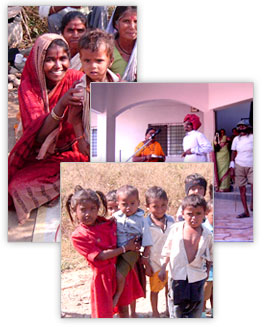
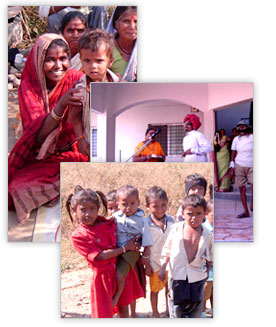
This evaluation explores the Community Led Initiatives for Child Survival (CLICS) programme, which was implemented by the Department of Community Medicine (DCM) and the Aga Khan Foundation (AKF) India, with support from the United States Agency of International Development (USAID). Over a period of 5 years, starting from the year 2003, the programme had 32,962 direct beneficiaries comprising children under the age of 3, women in the reproductive age group, and adolescent girls in 67 villages in 3 sectors of Anji, Gaul, and Talegaon in Wardha district of Vidharb region in Maharashtra, India. The key objectives of the CLICS programme were to:
- Provide affordable, high quality health care through effective partnerships at the village level.
- Build the capacity of coalitions of local partners to sustain child survival activities and health gains.
- Refine and test a social franchising model for the delivery of child survival interventions.
- Document, disseminate, and share key programme lessons and results to facilitate adaptation, replication, and policy advocacy.
The programme aimed at building the capacity of the community to develop, manage, and achieve ownership of the village-based child survival and health services. To achieve this goal, a mix of social mobilising, social franchising, community ownership, and cross-cutting, issue-based strategies was implemented in the project area. For example, social mobilisation was identified as one of the pillars for the success and sustainability of the project. It started with rapport-building exercises and culminated with the formation of a network of village-level groups. Community was mobilised in the form of female self-help groups (SHG) groups, Kissan Vikas Manch (male farmers' group), and Kishori Panchayats (adolescent girls' group). Representatives from these community-based organisations and the Gram Panchayats along with village level health workers then formed a village representative body known as the Village Coordination Committee (VCC). This committee functioned as a decision-making body to select and manage child survival activities in the villages.
The endline evaluation of the CLICS programme used USAID's Rapid Catch indicator system, which is intended to provide a snapshot of the intended population in terms of child health. There are 13 intervention areas that comprise the child survival monitoring framework used in this study: immunisation, nutrition and micronutrients, breastfeeding promotion, control of diarrhoeal disease, pneumonia case management, control of malaria, maternal and newborn care, child spacing, sexually transmitted infection (STI)/HIV/AIDS prevention, child spacing, maternal and newborn care, HIV/AIDS, and hand washing. The sample for the quantitative survey - carried out via interviews - was drawn from the following types of project beneficiaries: mothers of children aged less than 36 months, adolescent girls (unmarried girls aged 12-19 years), and fathers of children aged less than 36 months. The data collected from the survey were complemented by qualitative data obtained through focus group discussions (FGDs) - carried out with VCC members and other opinion leaders, women SHG members, members of the Kisan Vikas Manch, and members of Kishori Panchayats - and in-depth interviews conducted with 10 rural medical practitioners (RMPs), 3 medical officers, and 8 Panchayat Samiti representatives.
An excerpt from Chapter 9: Summary of Findings and Conclusion follows:
"In developing countries, malnutrition contributes to more than 50% of the under five mortality....At the start of the programme, the proportion of children aged 0-35 months underweight was taken as 43.3% from the NFHS [National Family Health Survey] 2 findings of Maharashtra. In the midterm survey, the proportion remained similar at 44.3%. However, in the Endline survey, the proportion decreased significantly to 41.1% indicating reduction of the under-nutrition in children.
...Birth intervals of at least 24 months are associated with a lower risk of illness and death in children. The proportion of children aged 0-23 months who were born at least 24 months after the previous surviving child was 64.4% in the baseline survey and it increased marginally to 68.0% in the midterm. It was interesting to note that this proportion increased significantly to 76.1% in the endline survey. This clearly indicates that there has been an increase in adoption of birth spacing methods in the project area and a majority of the respondents have ensured a gap of at least two years between their children, thereby reducing the mortality rates among infants and the number of births every year.
The proportion of children aged 0-23 months whose birth was attended by trained providers (including TBAs [traditional birth attendants]) was 82.2% in the baseline survey. This proportion increased significantly to 97.0% in the midterm survey. The proportion was similar in the endline survey at 93.9% indicating that since the inception of the CLICS programme, higher proportion of births are attended by a skilled provider leading to lower number of deaths during delivery.
Another major intervention supported by the CLICS programme was to ensure protection against tetanus....It has been observed that the proportion of mothers of children aged 0-11 months who received at least two tetanus toxoid injections before the birth of their youngest child has increased significantly. In this case, the booster dose of tetanus if received was also included. It was found that the proportion of mothers who received protection against tetanus was 83.3% in the baseline survey and has increased significantly to 93.4% in the endline survey.
The current international standards related to breastfeeding and infant/child nutrition are exclusive breastfeeding of infants until about six months of age and appropriate complementary feeding from about six months of age. In order to assess this, the proportion of children aged 0-5 months who were exclusively breastfed in the last 24 hours was calculated. This proportion was 80.1% in the baseline survey and increased to 85.1% in the midterm survey. However, in the Endline survey, this decreased to 62.87%, which may be due to extremely hot conditions which prevailed during data collection in which mothers often give water etc in addition to breast milk to the infants. The proportion of children aged 6-9 months who were given breast milk and complimentary foods in the last 24 hours was 72.0% in the baseline and it increased significantly to 97.98% in the Endline survey.
The ultimate goal of immunization programs is to [ensure]...full immunization coverage against five diseases (poliomyelitis, diphtheria, pertussis, tetanus, and measles) by the end of the first year of life. The proportion of children aged 12-23 months who were fully vaccinated was observed to be 62.4% in the baseline and 69.8% in the midterm survey. This proportion significantly increased to 95.8% in the endline survey. Similar trend was observed in the proportion of children aged 12-23 months who received measles vaccine where it increased from 67.1% in the baseline to 96.4% in the endline survey.
In an attempt to assess the protection against malaria, the proportion of children who slept under a bednet the previous night was recorded. It has been observed that though the programme was not involved in promotion of use of bed nets, 20.7% children aged 0-23 months reportedly slept under a bednet the previous night.
It is also a known fact that sanitation and hygiene related ignorance leads to almost 50% of the infections among the children....The proportion of mothers who reported washing hands before preparing food increased from 9.1% in the baseline to 36.0% in the midterm and 46.1% in the endline survey. The proportion with regard to washing hands before feeding children also increased from 14.0% in the baseline to 40.6% in the midterm and 57.2% in the endline survey. The proportion with regard to washing hands after washing child who has defecated increased from 83.8% in the baseline to 97.3% in the endline survey. Similarly, the proportion of mother reporting that they wash their hands with soap/ash after defecation also increased from 87.6% in the baseline to 98.6% in the endline. This trend indicates a significant improvement in the hand washing practices of the mothers which would lead to improved child health.
Two focuses of the community Integrated Management of Childhood Illnesses (IMCI) strategy are 1) timely recognition of signs in children that indicate the need for treatment and 2) effective home management of child illnesses. To assess this, the proportion of children aged 0-35 months with cough and/or difficult/rapid breathing during past two weeks who received increased fluids and continued feeding was calculated. The proportion of children who received increased fluids during this condition increased from 1.3% in the baseline to 32.2% in the Endline survey. Similarly, the proportion of children in this condition in the last two weeks who received continued feeding increased from 50.0% to 98.3% in the Endline survey.
...The proportion of mothers of children aged 0-35 months who were aware of at least two ways of reducing the risk of HIV/AIDS was only 9.2% in the baseline survey. The proportion increased significantly to 56.8% and 59.3% in the midterm and endline surveys to indicate that the awareness with respect to HIV/AIDS has increased significantly.
Overall, it is observed that almost all the indicators related to child survival...have increased significantly from the baseline survey. This indicates that the CLICS programme has been successful in achieving its objectives of increasing child survival and the achievements are truly commendable in all respects."
For more information, contact:
Aga Khan Foundation (India)
Sarojini House, 6 Bhagwan Dass Road
New Delhi
110001
India
Tel: 91 11 2378 2173
Fax: 91 11 2378 2174
akfindia@akdn.org
Development Experience Clearinghouse (DEC) Express, May 15 2009; and email from Dr. B.S. Garg to The Communication Initiative on May 27 2009.
- Log in to post comments