










































Engaging Men and Boys in Family Planning: A Strategic Planning Guide
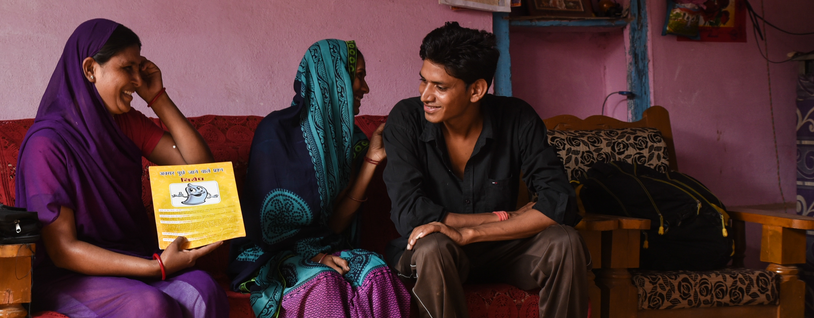
"Consider integrating information sharing and discussions into traditionally male spaces such as agricultural projects or development committees....Consider that men and boys often prefer accessing services through non-clinic and informal settings."
This guide is intended to lead programme managers, planners, and decision-makers through a strategic process to identify effective investments for engaging men in efforts to improve sexual and reproductive health. It includes examples of high impact practices (HIPs) in social and behaviour change and service delivery that can be designed to foster male engagement. In the guide, male engagement refers to the involvement of men and boys in family planning programmes across life stages, including addressing gender norms and gender equality.
Building on reviews of male engagement strategies for family planning, the guide provides illustrated steps to help identify relevant gaps and issues and offers programming approaches to consider. Throughout the steps, programmes are encouraged to address the specific contexts and diverse needs of programme beneficiaries.
Step 1: Define the behavioural aim of your initiative. Common behavioural aims of male engagement programming include increased male participation as:
- Contraceptive users (e.g., condoms and vasectomy) or as partners using methods requiring active cooperation (e.g., Standard Days Method)
- Partners engaged in open communication and decision-making about family planning and contraceptives
- Advocates for gender equality and family planning in their families and communities
Step 2: Assess men's and boys' knowledge and attitudes related to reproduction and contraception. Areas to consider for assessments include:
- Knowledge of puberty and reproduction across the life cycle - for example: boys' knowledge of physical, social, and emotional changes during puberty; young men's knowledge of reproduction, women's menstruation, and related issues; and knowledge of the fertile period.
- Knowledge, beliefs, and attitudes toward family planning and contraceptive methods, particularly as they relate to sexual functioning and gendered social roles - for example: knowledge of individual methods, how they work, and their side effects; ideal family size; and beliefs about how contraception affects health, work, and future fertility.
- Knowledge of, preferences for, and perceptions of family planning services - for example: men's and boys' knowledge of family planning service availability; men's and boys' preferred characteristics for contraceptive services, service providers, and health facilities.
Step 3: Assess how gender norms affect male engagement in family planning. Before designing a programmatic response, conduct a gender analysis of secondary data sources (e.g., Demographic and Health Surveys, peer-reviewed literature) or collect primary data through key informant interviews and focus group discussions with clients and providers in order to clarify the underlying norms that influence key behaviours - asking:
- Are women able and allowed to articulate and act on their preferences regarding sexual relationships and contraceptive use?
- Do partners discuss fertility intentions?
- Do women believe they need permission from their sexual partners, husbands or male partners, or gatekeepers to use or pay for family planning services?
- Is it considered socially "appropriate" for men and boys to support family planning?
- What are the social impacts for men and boys of engaging in gender equitable behaviours?
- As a key adverse factor in sexual relationships, is intimate partner violence/spousal violence common?
- What are the expectations around shared household responsibilities and caregiving for children in communities?
Step 4: Identify programming approaches that engage men and boys. After clarifying the relevant norms, identify the people whose opinions matter to men and may influence those particular behaviours. Such individuals could include community leaders, parents/in-laws, religious leaders, health care providers, or positive deviants (i.e., those already practicing the desired behaviour). Also, identify the sources and locations where men and boys prefer to receive sexual and reproductive health information and services. Table 1 on page 3 includes examples of social and behaviour change and service delivery HIPs commonly used to foster male engagement.
Tips from implementation experience:
- Develop and test messaging specifically for men and boys that resonates in the local language and culture. Likewise, designers should seek information channels and influencers that are appropriate to reach men and boys.
- Support individual and community reflection on norms, expectations, and roles pertaining to reproductive health, family size, caregiving, and contraception at different life stages through community group engagement. As part of this effort, consider how to engage community members to support men who act in ways that support positive sexual and reproductive behaviours.
- Make family planning information and services convenient and welcoming to men and boys. Are clinic hours accessible and compatible with men's availability? Do information, education, and communication materials include men and boys? Are male partners welcome in family planning counseling and services? Are male providers available? Are other reproductive health services offered (e.g., services for HIV and other sexually transmitted infections)?
- Design programmes that go to where men are such as, workplace programmes; water, sanitation, and health programmes that reach men; co-ops; trade unions; savings and loans; and agricultural extension programmes.
- Include strategies for reaching female partners when designing programmes to increase male contraceptive use.
Editor's note: On July 2 2018, a webinar was held to explore several perspectives on and experiences with implementing the guide. Click here in order to access a PDF with all the presentations from the webinar, as well as to watch a video (and/or view it below).
Publishers
4
Posting to IBP Global on January 23 2018; and email from Ados May to The Communication Initiative on July 5 2018.
- Log in to post comments