










































Enhancing Youth Political Participation throughout the Electoral Cycle: A Good Practice Guide
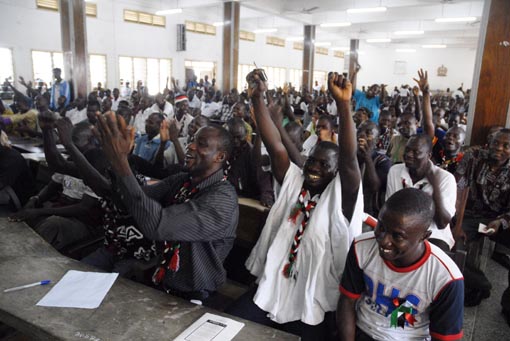
"Young people between the ages of 15 and 25 constitute a fifth of the world’s population. While they are often involved in informal, politically relevant processes, such as activism or civic engagement, they are not formally represented in national political institutions such as parliaments and many of them do not participate in elections. This can impact on the quality of democratic governance."
This resource provides a review of programming strategies for youth political participation before, during, and after an election. It contains insights from a United Nations Development Programme (UNDP) regional working meeting in Cairo, Egypt, in February 2012, as well as focus group discussions (FGDs) and interviews with Egyptian youth activists and development practitioners. The UNDP/UN-HABITAT Youth 21 global stakeholder meeting in Nairobi, Kenya, in March 2012 helped identify additional good practice examples. These gatherings - and this resource - are based on the contention that "[e]ven though people below age 25 constitute more than half the population in many developing countries, young people participate less than older citizens in most formal political processes, such as elections. This challenges the representativeness of the political system and leads to the disenfranchisement of young citizens."
The guide identifies key entry points for the inclusion of young people in political and electoral processes and compiles good practice examples of mechanisms for youth political empowerment around the globe, focusing on "innovative instruments with the potential to provide fresh inputs for programmes", as well as initiatives by other stakeholders. Specifically, it identifies and compiles 21 good practice examples, in the Arab region and beyond, of initiatives for enhancing youth participation throughout the electoral cycle: from youth engagement in civic and voter education (Central Asia, Cambodia, Tunisia, and Australia), as candidates through youth sections of political parties (Kenya), through to electoral monitoring of elections (Mexico).
The review starts with a discussion of legal frameworks (example: In Turkey, several youth organisations and local youth councils have successfully campaigned for lowering the eligibility age for Parliament from 30 to 25 years), and then considers entry points for support in cooperation with different electoral stakeholders in these periods: the pre-electoral period ("Social media, blogs and other online tools can give educated young citizens a voice for political activism, and open channels for direct feedback between government officials and youth"), the electoral period (example: UNDP Cambodia's ongoing Multimedia Civic Education Campaign is based on a large survey on youth civic participation), and the post-electoral period (example: in Germany, the youth-led "Parliament Watch" allows citizens to scrutinise their legislators by asking questions and accessing information about voting behaviour).
Selected insights include:
- Capacity development for young candidates has proven to be more effective as a continuous effort than as a one-off event three months before an election.
- Young people who participate actively in their community from early on are more likely to become engaged citizens and voters.
- Youth political participation needs to be meaningful and effective, going beyond token gestures. Capacity development is an integral measure, and while building individual capacities is key, the capacities of organisations and the degree to which an environment enables individuals and institutions to participate in political processes can also be factored in.
- It has been found to be beneficial when interventions to assist youth are as youth-driven as possible. They can encourage youth to participate in project management, partner with youth-led initiatives, and facilitate youth inclusion in national and local consultation processes, including through new technology.
- Following a rights-based approach entails considering youth as potential agents of change - as part of the solution, not a problem to be resolved by others.
- Young people are not a homogenous block, and other social aspects (such as gender, rural/urban dwelling, ethnicity, language, among others) need to be taken into consideration when designing interventions.
- To stress a message of youth inclusion, initiatives should be transparent, respectful, and accountable. To be relevant, they can link to specific concerns of youth such as unemployment, the environment, and/or HIV and AIDS.
This knowledge product is intended for different stakeholders (political parties, electoral management bodies, civil society organisations (CSO)s, and UNDP practitioners) as guidance to UNDP programming in the context of long-term electoral assistance.
English, Arabic, French, Russian, and Spanish
76 (English version)
UNDP website, March 6 2013. Image credit: NIMD blogs
- Log in to post comments