










































Gender Norms and Crisis
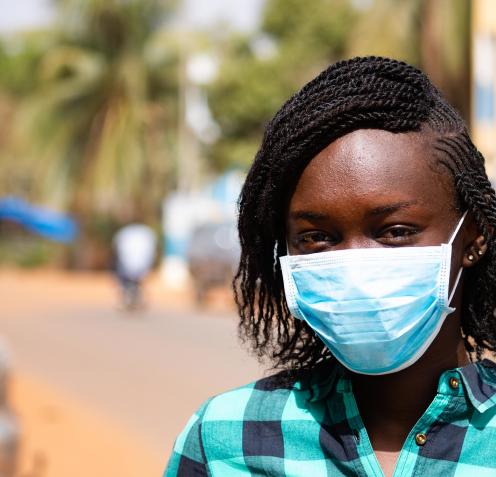
"What does emerge strongly from the literature is that policy responses to crises are often gender-blind, or treat women as a homogenous group....Responses that do not take into account gendered norms may prove ineffective or may inadvertently reinforce inequalities..."
This annotated bibliography brings together key resources on crises and gender norms to shed light on the potential outcomes of the COVID-19 pandemic. It outlines studies that explore the effects - positive and negative - on gender norms of different types of crisis to suggest patterns that may be brought about or amplified by the pandemic.
Studies of outbreaks of Ebola, severe acute respiratory syndrome (SARS), dengue fever, tuberculosis, and Zika show that gendered roles in households and communities affect disease transmission, including the relative levels of exposure for women and men, and the settings and stages of outbreaks that put them at the greatest risk. In addition to the initial impacts of an outbreak of infectious disease, there are "second round impacts", such as economic recession and displacement. Past experience highlights the importance of gendered roles in responding and adapting to these challenges.
The bibliography features (and provides links to) 29 pieces of open-access literature - predominantly, materials produced since 2010 - identified in a rapid literature search carried out in April and May 2020. Each of the 3 sections of the document deals with a different type (or types) of crisis - health crises, economic crises, and conflict/displacement - beginning with global studies, evidence reviews, and other more general pieces of literature, before moving on to more detailed studies of specific country contexts, events, and/or programmes. Recognising that much of the relevant literature focuses on gender equality and women's rights or empowerment more broadly, rather than on gender-norm change, the bibliography includes key materials that contain norms-related content but that do not use "norms" terminology.
The findings gathered from this bibliography, which focuses on evidence-driven analyses, suggest 3 key areas for further research to inform responses to the COVID-19 pandemic:
- how gendered roles shape transmission and levels of risk for women, men, girls and boys;
- how responses to the pandemic extend and reinforce pre-existing gender norms, including women's domestic work and unpaid care burdens; and
- how to harness opportunities presented by the crisis to drive positive shifts in gender norms.
48
ALiGN website, June 17 2020. Image caption/credit: A woman wears a face mask in Mali during the COVID-19 (coronavirus) outbreak. © World Bank / Ousmane Traore
- Log in to post comments