










































Gender, social relations, and development organisations: Straddling formal and substantive equality
Author: Ranjani K. Murthy, August 28 2023 - Development organisations attempt to change social hierarchies while reflecting them. This blog focuses on the latter: how development organisations in South Asia reflect social hierarchies, and how these hierarchies can be challenged.
Why do we state that development organisations in South Asia like non-governmental organisations (NGOs) reflect social hierarchies? First, many development organisations are headed by men and are from the dominant community. Leadership transition is not systematically planned and does not adequately involve women staff from marginalised communities. While women may be represented in the governing board of NGOs, this representation is often not equal, and few are women from marginalised identities or women leaders of federations/apex bodies. There is a marked gender division of labour in most NGOs, with agriculture, irrigation, and climate resilience being men's domain, and health and education being that of women, and the sectors occupied by women are paid less than that of men. The working hours of NGOs are based on the male body and do not consider care responsibilities. Senior positions, other than in women-only organisations, are rarely held by women. Post COVID-19, some NGOs are offering flexible working space and hours, which is convenient for women staff but isolates them. Committees to address sexual harassment, caste/minority abuse, or child abuse are not always present. Prayer rooms for accommodating practices of some communities to pray are not always present, other than in countries where they are the majority. These are just a few issues of concern in NGOs’ internal functioning.
Looking back at several years of (the author's) facilitating change in organisations, there seem to be two approaches making development organisations gender/socially responsive (transformation is impossible as of now): formal equality and substantive equality. Formal equality entails having 50% quotas for women and treating men and women in a similar manner to achieve equity in outcomes. Substantive equality implies treating women/men, Dalits/non-Dalit persons, indigenous/non-indigenous people, disabled/non-disabled persons, minorities/majorities, heteronormative/LGTBIQ people differently to achieve equity in outcomes in organisations.
The 'formal equality' approach includes proportionate quotas for women and those from marginalised communities in recruitment, governance, training, promotions, equal access to office vehicles, etc. However, these measures are not enough. For example, even if quotas are there for women technical staff, they may not be filled, as few apply. Unless childcare facilities are available at training centres or spouses have been sensitised on gender issues, women staff with young children may not be able to attend training programmes of NGOs and avail themselves of promotion opportunities.
The 'substantive equality' approach not only includes quotas but treats women and men, and those of different communities, differently to achieve equity in outcomes. Some real-life examples of efforts to move towards substantive equality are listed below.
Governance/leadership:
i) Having one-third women representatives (from marginalised identities) or leaders of the federation/apex body on the governing board.
ii) Having one woman staff representative (who is elected) to sit in on board meetings to air concerns of women staff (in particular, those belonging to marginalised groups).
iii) Establishing committees to address sexual and child abuse within organisations, with at-least half being independent women members from marginalised identities.
iv) Asking such committees to also address other sources of abuse, such as on the basis of caste, religion, disability, sexual orientation, and gender identity, and to investigate anonymous phone numbers or emails to offices.
v) Having a gender and social relations taskforce (gender sensitive women and men, with preference to those with marginalised identities) to promote mainstreaming of gender and social (substantive) equality in internal functioning and programmes.
Human resource development:
vi) Making concessions for required qualifications for women from marginalised identities during recruitment and promotion, while providing on-the-job training, either face to face or online.
vii) Providing childcare support for women and men staff in the office, while also providing similar services while training.
viii) Integrating gender and socially responsive/transformative behaviour into job descriptions and performance appraisals.
ix) Ensuring face-to-face or online gender sensitisation of all staff and spouses of women staff so they support women staff during promotions, late-hour travel, and care work.
x) Providing maternity, paternity, and adoption leave for women and men staff.
xi) Considering festivals celebrated by women and men from marginalised communities when offering leave options.
Infrastructure:
xii) Creating ramps to the office and posters and staff manuals in braille as well.
xiii) Providing access to separate, clean, and functional toilets, with ramps for men and women staff, and depending on their choice integrated (with women and men toilets) or separate toilets for transgender persons. Women’s/some transmen’s toilets should have menstrual pad disposal facilities.
xiv) Ensuring the height of white boards, podiums, and their infrastructure is suited to the height of women and staff with motor disabilities.
xv) Offering special access to easy-to-enter vehicles for women staff and staff with disabilities during late-night meetings.
Culture:
xvi) Challenging informal hierarchies reflected in how women staff and staff of marginalised identities are treated.
xvii) Changing the informal culture of who looks after guests (women), who garlands (women), and who dances (women). The cultural mores of Dalits, minorities, transgender people, and sexual minorities should be made visible.
Development organisations can be responsive to gender and social relations only when a substantive equality approach is adopted, along with formal equality. This approach takes time and does not fit well with target-driven efficiency approaches!
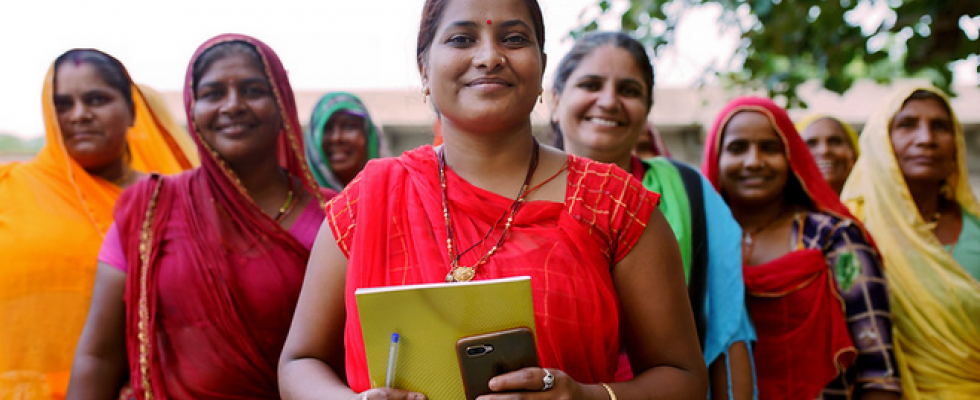
Image credit: UN Women/Second Chance Education Programme (CC BY-NC-ND 2.0)
As with all the blogs posted on our website, the content above does not imply the endorsement of The CI or its Partners and is from the perspective of the writer alone. We do not check facts and strive to retain the writer's voice, as is detailed in our Editorial Policy.
- Log in to post comments