










































Illustrative Communication Strategy for Prevention and Control of Malaria during Pregnancy
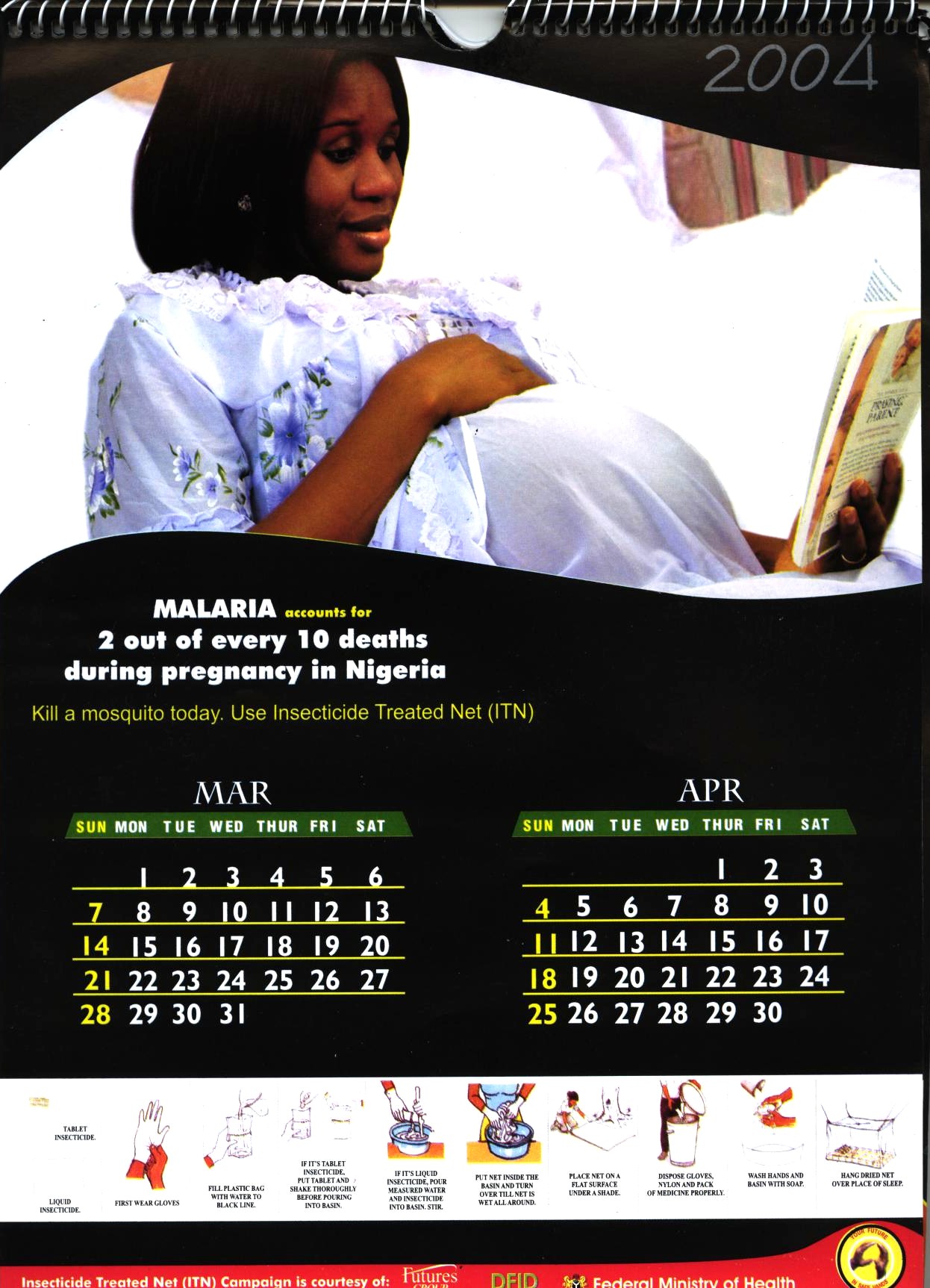
Grounded in the belief that effective communication is the basis of malaria-related behaviour change for all stakeholders - women, their families, community leaders, programme managers, and health care providers - this communication strategy document, developed by the Johns Hopkins Bloomberg School of Public Health's Center for Communication Programs, briefly outlines a generic communication strategy that supports the prevention and control of malaria in pregnancy (which contributes to maternal anaemia, low birth weight, and infant deaths). It covers background about malaria in pregnancy, walks the reader through the strategy design process, points out where malaria can be integrated into a communication strategy, and lists priority problems with suggestions about how to address them. Also provided is a strategy outline and example of a monitoring and evaluation plan.
With the goal of ensuring that pregnant women prevent malaria through the use of intermittent preventive treatment (IPT) with an effective anti-malarial drug and regular use of insecticide-treated bed nets (ITNs), the paper outlines a 3-step process that can be used to develop a communication strategy:
- "Develop a working group of stakeholders who can guide the process of strategic development. These should be program managers, IEC [information, education, and communication] and technical experts, service providers and community people, including decision makers and expectant mothers.
- Conduct a literature review of work that has already been carried out on malaria during pregnancy to better understand important components such as: recognition of malaria, decision-making, treatment practices, treatment sources, compliance with treatment, caretakers' sources of information, availability and accessibility to effective prevention and control drugs and ITNs, community perception about formal health services, and relevant MOH policies. Program managers should examine the literature review to identify gaps in providers' knowledge and to address these gaps. A special focus should be placed on helping providers and the community to overcome any obstacles to behavior change in implementing correct action.
- Carry out qualitative research to fill in the gaps. This research can take the form of focus group discussions with expectant mothers, women aged 35 and above and men and community leaders. Key informant interviews with community drug vendors, traditional birth attendants, and qualified health workers can also provider invaluable information on important issues to address. The qualitative research will provide more detail about what people do, why they do it and the obstacles to behavior change."
Out of this process may emerge areas for strategic focus, such as:
- underlying problems - for instance, communication between clients and providers is not always optimal and can be improved;
- audiences, including policymakers and programme managers, community decisionmakers (men, mothers-in-law, and opinion leaders), young and expectant mothers, and service providers; and
- media and mobilisation, including strategies that call for: a logo to identify sources of quality malaria information and services; use of newsletters to improve provider compliance; radio programmes, information sheets and posters to summarise treatment guidelines; and meetings with in-charges and orientations to improve support supervision.
The next section of the paper elaborates a communication strategy for control of malaria during pregnancy based on formative research results. "After examining all of the priority problems, the working group will decide which are the most important and develop a communication strategy that addresses these. For example, if we choose the first two priority problems: service providers are not complying with malaria during pregnancy guidelines, and pregnant women are not preventing and treating malaria adequately, we can develop four important elements in the strategy:
- Creating a symbol that identifies providers and facilities offering correct information and services for malaria prevention and treatment for pregnant women. (This symbol can also identify sources of information and treatment for children under the age of five.)
- Building a sense of urgency among leaders and men and persuading them through radio, print, and interpersonal channels to advocate for, support and provide the resources necessary to pregnant women for quality, focused antenatal care including intermittent preventive treatment with an effective anti-malarial drug and use of an insecticide-treated net. Also, they should support prompt and proper treatment of pregnant women with fever.
- Improving the quality of information and training provided to health care providers through effective dissemination of simplified treatment guidelines and job-aids.
- Motivating pregnant women to seek IPT and use ITNs through group education sessions, radio, point of service materials and community-based interventions."
Various strategy outlines based upon the priority problem areas are presented. It is noted that the service delivery, policy, management, logistics, and supply interventions that are necessary complements to any successful communication strategy must all be in place. "Recognizing the crucial importance of these complementary service delivery issues, the managers of the communication program must closely coordinate with their service delivery counterparts. Advocacy-related communication will be crucial to ensuring that the necessary services are in place. Communication programs should be synchronized with services."
Editor's note, March 21 2019: Unfortunately, this document is no longer available online.
HealthCOMpass website, accessed January 22 2015. Image credit: Jhpiego
- Log in to post comments