










































1 minute
Multisector Action to Enable Social and Behaviour Change for the Elimination of Schistosomiasis, a Water-borne Neglected Tropical Disease
Abstract for Preformed Panel Presentation from the 2022 International SBCC Summit in Morocco:
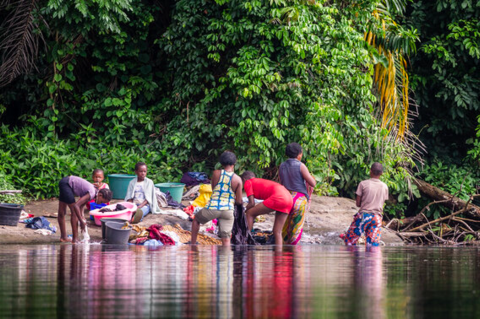
"Schistosomiasis is a water-borne, neglected tropical disease (NTD), affecting over 200 million people worldwide, causing cognitive impairment and stunting in children, inflammation and organ damage and, if untreated, infertility, liver fibrosis and bladder cancer. People are infected during routine domestic, occupational, and recreational activities, which expose them to infested water. It is linked to lack of access to safe water, sanitation and hygiene (WASH), involving multiple sectors. The World Health Organization (WHO) roadmap for NTDs 2021-2030 set the target of schistosomiasis elimination as a public health problem by 2030 and interruption of transmission in certain settings. It emphasizes the need for multisectoral planning and coordination across Health, WASH, Education, Agriculture and other sectors and for community engagement and behaviour change to achieve the roadmap 2030 goals. Large-scale treatment interventions for at-risk populations are the cornerstone of efforts to prevent schistosomiasis morbidity. This approach is proven to control schistosomiasis and reduce the prevalence of infections but has not led to elimination. Behaviour change is recognized as a critical component for schistosomiasis elimination, yet it remains under-resourced, and under-implemented. Scale-up of multisectoral coordination mechanisms, bringing together health, education, community engagement, WASH and environmental measures, is crucial to address structural barriers and enable behaviour change. In this panel we will present case studies from Ethiopia, Zanzibar and Uganda and discuss approaches and learnings to implementing multisectoral coordination and community engagement to create an enabling environment for effective behaviour change, within and across communities, for sustainable disease elimination."
Approved abstract for the 2022 SBCC Summit in Marrakech, Morocco. From SBCC Summit documentation. Image credit: Global Schistosomiasis Alliance