










































Perceptions of Cervical Cancer Prevention on Twitter Uncovered by Different Sampling Strategies
University of California, San Francisco, or UCSF (Le, Radcliffe, Lyles, Lyson, Sawaya, Pasick, Sarkar); Northeastern University (Wallace); University of Pennsylvania (Centola)
Increasing the acceptance and uptake of the human papillomavirus (HPV) vaccine is expected to help close the gap in prevention behaviour, reducing incidence of cervical and other HPV-related cancers. Online social networks such as Twitter and Facebook have been an effective platform for disseminating and counteracting health messages, particularly in young adults. This study sought to combine automated analysis and qualitative coding, following best practices for mixed-methods research to characterise the ways in which users use Twitter to discuss cervical cancer prevention and detection.
The researchers accessed a free 1% sample of tweets from Twitter's publicly available application programme interface (API) over the period of March 2012-March 2014. They then searched for messages relevant to cervical cancer screening and prevention. They aimed to capture relevant themes using 3 sampling strategies: 1) the top-ranked (most-retweeted) tweets, 2) simple random sample of tweets, and 3) a standard statistical "topic modeling" approach using Latent Dirichlet Allocation (LDA).
Four prevalent themes emerged from the qualitative analysis of tweets (examples of each are provided in the paper):
- Cervical cancer prevention discussed on social media uses positive messaging to encourage low-effort/high-reward behaviour and female empowerment - Tweets commonly focused on the framing of cervical cancer screening promotion in terms of the benefits of obtaining screening (a "gain" message) rather than the cost of not obtaining screening (a "loss" message). Not only was prevention a major focus of tweets, these messages showed a persuasive tone by framing cervical cancer prevention as easy to accomplish and by addressing barriers to obtaining screening. Both high-tech and low-tech strategies were highlighted as potential strategies for early detection of cervical cancer.
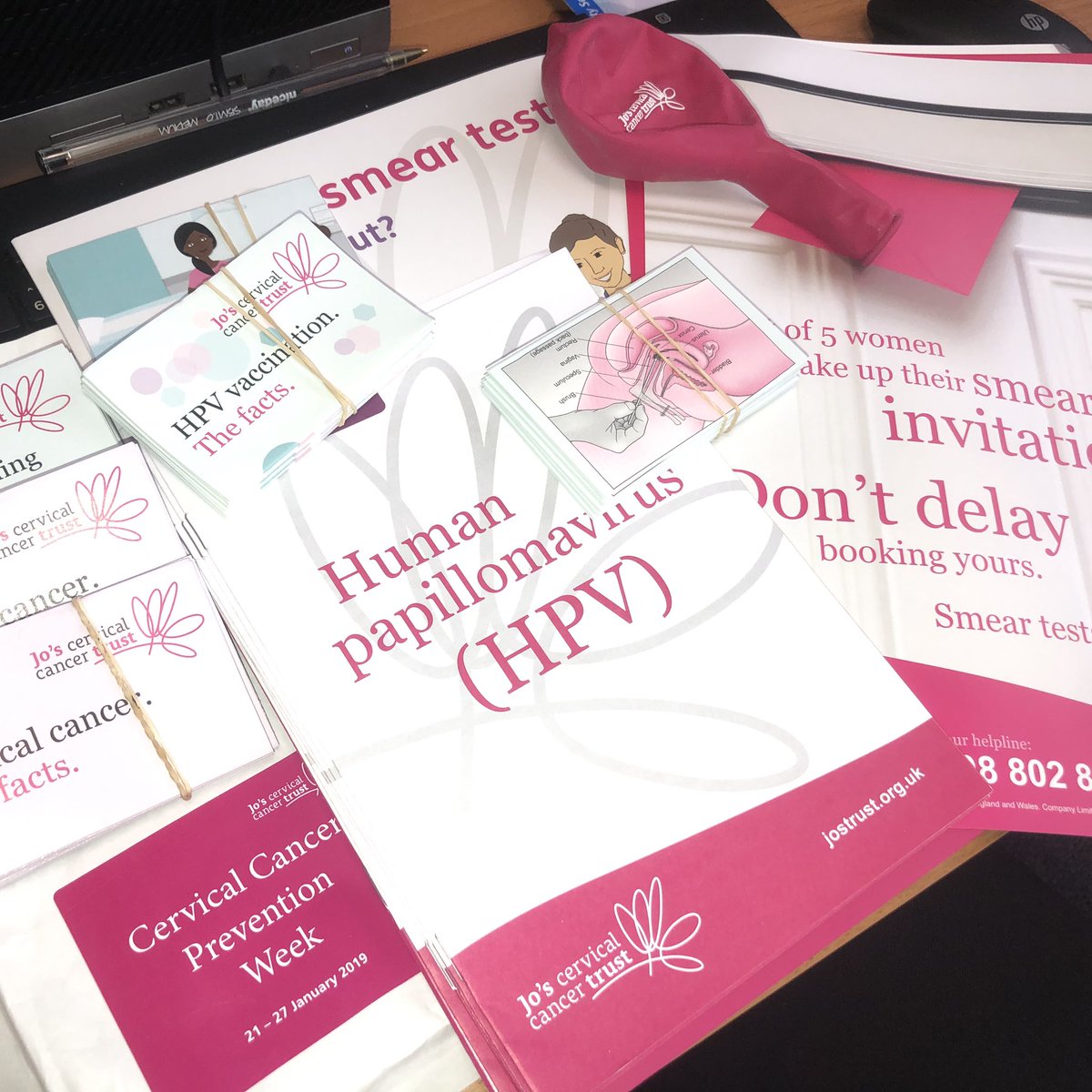
- "Pap smear" is used as a stigmatised term, but there is an ongoing effort to de-stigmatise the term on social media - The term was referenced in 34-41% of tweets, but the manner in which the term was used varied widely, from a positive means to raise awareness of cervical cancer prevention to a crude joke unrelated to cervical cancer or embedded within political commentary. Attempts to destigmatise the term could be seen, for example, through the use of the hashtag #SmearForSmear, a social medial campaign developed by Jo's Trust, a United Kingdom (UK) cervical cancer charity. The #SmearforSmear campaign encouraged individuals to use the hashtag to post a photo of themselves on social media with lipstick smeared on their face, and to nominate a friend to do the same. (The video below is associated with that campaign.) According to the researchers, the fact that 4 of the 5 users that tweeted the #SmearForSmear hashtag in the most retweeted sample were verified users demonstrates the ability of a positive, cancer prevention message to gain traction among highly visible, influential, and reputable users on Twitter.
- There is largely positive public opinion about HPV testing and vaccination - Tweets expressing sentiment, positive or negative, about the HPV vaccine were relatively infrequent, but vaccine-related messages primarily promoted its use as a safe and effective means of preventing cervical cancer with large potential to eradicate the burden of the disease on a global scale. Sample tweets often provided links to peer-reviewed scientific literature as further support for positive vaccine sentiment. Tweets with anti-vaccine sentiment primarily express concern about vaccine safety.
- Liberal political views on women's rights, reproductive health, and access to care in the era of the United States (US)' Affordable Care Act (ACA) are prevalent - Because cervical cancer is associated with reproductive health, the cancer screening discussion on Twitter is often bundled with other women's health issues, such as mammograms and prenatal care.
Taken together, these themes are centred on perceptions of cervical cancer prevention messages as they relate to decision-making, social norms, and political views.
Figure 2 in the paper shows the occurrence of themes that emerged:
- Political commentary: tweets that reference political figures or policy;
- Opinion on vaccine: tweets with a subjective perspective in support or opposition of the HPV vaccine;
- Advocacy (the most prevalent to emerge): tweets that advocate or advise followers to take an action in prevention of cervical cancer, or that describe prevention efforts;
- Personal experience: tweets that share an individual's experience with cervical cancer or HPV, either from the individual or a surrogate communicator; and
- Healthcare access: tweets that discuss barriers to obtaining healthcare, including the cost of care.
In reflecting on the findings, the researchers note: "this analysis reveals that positive messages pertaining to pap smears and cervical cancer prevention are more likely to be tweeted by verified users, while messages that reinforce the stigma associated with pap smears or express an overtly political opinion are more likely to come from unverified users. This underscores that verified users are crucial to facilitating the spread of positive, evidence-based public health messages on social media. It also suggests that there may be potential to address misinformation by identifying unverified users on Twitter and educating the public to be aware of the credibility of information tweeted by unverified users."
They also observe that anti-vaccination messages that occur on Twitter in response to positive sentiment tweets "are important for understanding how to reach unvaccinated populations and engaging with them to dispel myths about the vaccine. For example, tweets expressing anti-vaccination sentiment show a mistrust of government sources of information or allude to a conspiracy theory with pharmaceutical corporations." The findings "indicate that while analyses may reveal a largely positive sentiment of the HPV vaccine on the surface, a more in-depth examination of the replies to the positive tweets about the vaccine show how anti-vaccine debates are active on Twitter and present an opportunity for public health advocates to engage in dispelling myths and correcting misinformation about the vaccine."
In conclusion, the study "showed that tweets with positive messages lend themselves to wider promotion and increased sharing through retweets, demonstrating the importance of this language for public health promotion. Researchers should not confine themselves to highly shared tweets in order to capture a wider breadth of perspectives and capture less political content. In this case, a random sample detected the same themes as topic modeling, but the relative frequency from topic modeling fell in-between top-ranked and random, suggesting it is useful in qualitatively assessing relative frequency of themes. These findings have important implications for future studies to carefully consider sampling methods to uncover wider breadth of conversations about cervical cancer prevention on social media."
PLoS ONE 14(2): e0211931. https://doi.org/10.1371/journal.pone.0211931. Image credit: Dr Fox & Partners via Twitter. Video caption/credit: "'The Smear Test Film' is a health education resource for women eligible for cervical screening (smear tests) who have mild and moderate learning disabilities. It has been made by Public Health England in association with Jo's Cervical Cancer Trust."
- Log in to post comments