










































Voices from the Ground

From Panos London, this blog follows the lives of five people working and living in developing countries, tracking their experiences in relation to the Millennium Development Goals (MDGs). The purpose is to offer an insight into the progress of MDG pledges to cut poverty, provide better education, and improve the health of the world's economically poorest people.
Communication Strategies
Voices from the Ground, December 1 2010 is an online platform for recording the challenges, frustrations, and successes of people affected first-hand by the impacts of the MDGs. Their experiences are recorded by Panos London local journalists in those countries who tell those experiences as first person. The bloggers' stories are told as they happen and feature people from around the world:
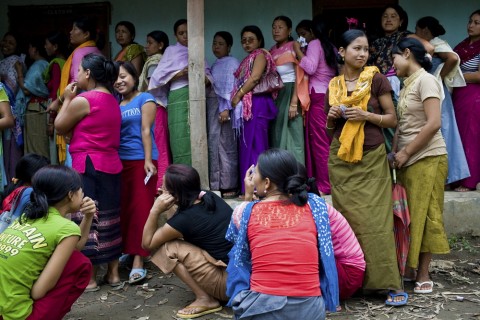
- Northeast India: Takhelchangbam Ambravati (known as Ambra) is a grassroots volunteer with a local non-governmental organisation (NGO) near Imphal, the capital of the northeastern state of Manipur. She visits local women to collect information about human rights violations, domestic violence, and trafficking.
- Pakistan: Zubaida Noor is working with women in a small village in Khyber Putkunkwa, previously known as North-West Frontier Province, who lost their homes in the recent floods. Her NGO, the Noor Foundation, focuses on women's education, health, and emancipation.
- Jamaica: Dr Tracy Evans-Gilbert is head of the paediatric HIV programme at the Cornwall Regional Hospital, Montego Bay's main public hospital. Part of her job is to trace HIV-infected children who are not receiving treatment and babies with unknown status born to HIV-infected women.
- Mali: As a housewife in the village of Tamala in the south of Mali, Sali Samaké has to fetch water every day to do the cooking and washing for her family. She is also one of thousands of small farmers trained by the Malian government to monitor rainfall.
- Brazil: Dagmar Rivieri Garroux, known as Tia Dag (Auntie Dag), runs Casa do Zezinho, a school in one of south Sao Paulo's favelas. By offering social, cultural, and artistic activities for children, Tia Dag and the teachers aim to prevent them from joining Sao Paulo's criminal gangs.
Development Issues
Children, Economic Development, Education, Gender Equity, Maternal Health, HIV/AIDS, Health, Environment.
Sources
Email from Tia Jeewa to The Communication Initiative on October 15 2010; and Voices from the Ground blog, December 1 2010. Image credit: Sanjit Das / Panos Pictures


- Log in to post comments