










































A Feminist Take on International Media Development: How Media Development Projects Empower Women and Marginalized Groups
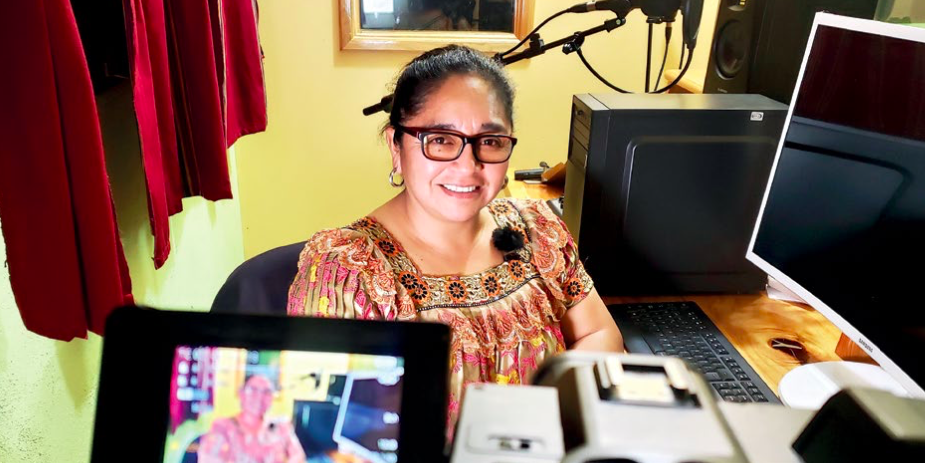
"Feminist approaches to foreign and development policy are gaining momentum. Media development, for its part, is aimed at creating independent media landscapes benefitting women and marginalized groups and, ultimately, society as a whole."
This report shares the findings of a study conducted by Deutsche Welle (DW) Akademie that sought to demonstrate the important role of media development in implementing feminist development policy and to examine how this can look in local project work. The study captured the perspectives of DW Akademie partners and media development organisations across the world to explore exactly how media development projects empower women and marginalised groups - in particular, how their projects contribute to strengthening the rights, resources, and representation of women and marginalised groups.
As explained in the brief, "Feminist approaches to foreign and development policy are increasing internationally, with at least ten countries worldwide now having adopted policies that place women at the center of their external relations. Since March 2023, Germany has pursued both a feminist foreign policy and a feminist development policy." Strengthening the three Rs: the rights, resources, and representation of women and marginalised groups is a core pillar of this feminist policy development strategy. "In the 'rights' area, this includes measures such as addressing discriminatory laws and norms and empowering people to exercise their human rights, including the right to freedom of opinion and expression. 'Resources' concerns access to income, property, and knowledge, including education and information. Lastly, 'representation' is about increasing participation in social, political, and economic decision-making processes, including national and international advocacy groups and networks."
Currently, little research exists on how media development as a sector can contribute to furthering the goals of feminist policy approaches. It is for this reason that DW Akademie conducted the study, which involved 16 in-depth interviews with DW Akademie programme managers and project partners and an online survey among 85 media development actors.
After briefly outlining the theoretical framework of feminist development policy, the report discusses the research findings. It first looks at the direct and indirect groups the projects that were the subjects of this survey sought to reach. As feminist development policy documents often refer to women and "marginalised groups" without further elaboration, the report discusses who exactly the beneficiaries are - particularly in the work of DW Akademie and its partners. The study further examines whether and to what extent the relevant priority groups are involved in the design of the respective projects based on the assumption that meaningful participation and co-creation are the basis for feminist development policy. The report then explores how the projects promote the three Rs (rights, resources, and representation) of these groups in support of feminist development policy. As noted in the report, this step is considered central to assessing the role of media development in implementing feminist policy on the ground.
The findings, for example, show that media development activities can strengthen women and marginalised groups when it comes to exercising their rights, accessing resources, and increasing their representation. Raising awareness through media reporting, providing opportunities for networking and community building, and supporting women and marginalised groups as producers of journalistic content are the most common activities mentioned by interviewees and survey respondents. Interviewees in particular often framed their media development activities in terms of participation and dialogue for everyone, with a diverse media landscape helping all parts of the population to make their voices heard. This perspective is very much in line with feminist policy approaches, such as the strategy of feminist development policy employed by the German Federal Ministry for Economic Cooperation and Development.
The report also presents participant views on whether 'feminist' is a useful term for their work and discusses alternative terminology. With this reflection, the study seeks to contribute to a better understanding of the benefits and risks involved in using the term 'feminist development policy' in project work.
In conclusion, the report outlines recommendations for donor organisations on how to improve their support for media development projects that address the needs of women and marginalised groups. When asked what support from donor organisations is needed to scale the impact of project work and empower women and marginalised groups, most of the survey respondents weighted core funding as the most important form of support. Survey respondents also stressed the importance of establishing regional platforms for networking and promoting research to better understand the needs of, and opportunities for, women and marginalised groups.
Some of the recommendations highlighted by research participants relate to difficulties that have been known to development cooperation for a long time. They include streamlining bureaucratic requirements, recognising the qualitative impact of projects over time, and promoting strategic multi-stakeholder partnerships.
Furthermore, based on several fundamental difficulties that are characteristic of working with women and marginalised groups, interviewees made the following recommendations:
- Consider cultural diversity in the project countries.
- Intensify efforts for advocacy toward governments to remove oppressive and repressive laws impeding the empowerment of women and marginalised groups.
- Establish care structures (such as child care) in projects on the ground to removing structural barriers to participation.
- Allocate more resources to those most left behind.
- Provide continuous support to forgotten and ongoing humanitarian crises.
DW Akademie website on April 19 2024. Image credit: Communicares
- Log in to post comments