










































Vaccination Hesitancy and Zero-Dose Children in Borno State, Nigeria: Comparative Analysis of Urban Priority and Non-priority LGAs and Their Implications for Immunization Coverage
United Nations Children's Fund (UNICEF) Nigeria (Hassan, Okoli); Rivers State University (Azike); Rivers State University Hospital (Okoye)
"Notably, the prevalence of vaccine refusal and non-compliance was associated with distinct socio-demographic factors, emphasizing the importance of tailoring interventions to specific population characteristics."
Borno State, situated in northeastern Nigeria, faces unique challenges due to a complex humanitarian context marked by conflict, displacement, and strained healthcare systems. In this context, zero-dose children, defined as those who have never received any routine vaccinations, represent a vulnerable population at higher risk of disease transmission. This study focuses on specific local government areas (LGAs) to provide a nuanced understanding of vaccine refusal, non-compliance, and partial compliance, differentiating between the zero-dose priority LGAs of Maiduguri Metropolitan Council (MMC) and Jere and the non-priority LGAs of Konduga and Mafa.
The study's methodology involved quantitative analysis of socio-demographic factors, electronic media ownership, and parental characteristics. The study used a stratified sampling method to ensure representation from diverse socio-economic and cultural backgrounds within the study areas. Data were collected through household surveys collected from 173 participants, analysis of vaccination records, and assessment of immunisation coverage rates for period of twelve months. Statistical methods, including chi-square tests, were utilised to explore relationships between settlement types, parental levels of education, and vaccine-related behaviours.
The study indicates that 121 (69.9%) of the children were never immunised (zero dose children), a significantly higher proportion than the 52 (30.1%) who were partially immunised but later refused to complete the vaccination schedule. The highest number of noncompliance cases was recorded in MMC (28.9%), followed by Jere LGA (24.9%), Konduga (27.7%), and Mafa LGA (18.5%). Some nuances of the data include:
- The majority of noncompliance cases were found in Type II settlements ("squalor": a collection of poorly set buildings, not government approved), constituting 68.8% of the data. A strong statistically significant association was observed between settlement type and vaccine refusal in the past (p-value = 0.000). These finding aligns with existing knowledge that socio-economic conditions and living environments can influence health-related behaviours.
- Regarding awareness of vaccination campaigns and awareness of accessing vaccinations, both associations show a statistically significant relationship with p-values of 0.000. These data suggest that the level of awareness of vaccination campaigns and the awareness of accessing vaccinations by parents/caregivers significantly affect compliance for vaccination across different settlements.
- The analysis reveals a statistically significant association between settlement type and the proximity of the clinic as an influence on vaccination acceptability by parents/caregivers (p-value = 0.031). This finding implies that the location of clinics in relation to settlement type has an impact on the acceptability of vaccination amongcaregivers.
- Settlement type was also found to influence the adequacy of information about child vaccination, with a statistically significant association (p-value = 0.041). The data suggest that those in urban LGAs are more likely to have more adequate information about child vaccination, as 79 (45%) respondents reported having no adequate information about the vaccination status of their children.
- A significant proportion (74.0%) of parents/guardians had no formal or non-formal educational status. The results demonstrate a statistically significant correlation between the level of education of the parent or guardian and the immunisation status of the child (p-value = 0.001). However, no statistically significant relationship is observed between the parent/guardian's educational background and the history of refusing vaccinations (p-value = 0.333).
- The association between parent/guardian educational level and vaccination card availability was also found to be statistically significant (p-value = 0.012). This finding suggests that the retention of vaccination cards by parents or guardians is influenced by their educational attainment.
- The majority of households (88%) are headed by a male. Previous research indicates that, in patriarchal family structures, where a male is the household head, there may be specific gender norms and power dynamics that impact health-related choices. In the present study, the relationship between the gender of the household head and vaccine refusal in the past is statistically significant, with a p-value less than 0.05. The data also indicate that 141 (89.8%) households who refused vaccination in the past have men as the head of the household, while 166 (10.2%) have women as household heads. Further exploration of the data reveals that out of the 21 households with female household heads, 20 (95.2%) were never immunised with any vaccine, compared to 101 (66.5%) of households with male household heads being never immunised (zero dose).
- The study provides insights into the electronic media ownership within households, revealing that 122 (70.5%) of the households own a radio, 23 (13.3%) have television sets, and 28 (16.2%) possess both television and radio. The widespread ownership of radios in the households suggests a potential avenue for health communication strategies, especially for interventions requiring broad dissemination. Moreover, the majority of households, numbering 154 (89.0%), own handsets (mobile phones). Mobile technologies, including text messages and apps, have shown promise in providing immunisation reminders and educational content directly to households.
In conclusion: "The findings underscore the need for nuanced, context-specific approaches to enhance immunization coverage, awareness, and acceptance. Tailored interventions addressing educational disparities, gender dynamics, and settlement-specific challenges could contribute to improved vaccination outcomes. Additionally, leveraging electronic media platforms for targeted health communication campaigns holds promise in enhancing awareness and addressing misinformation."
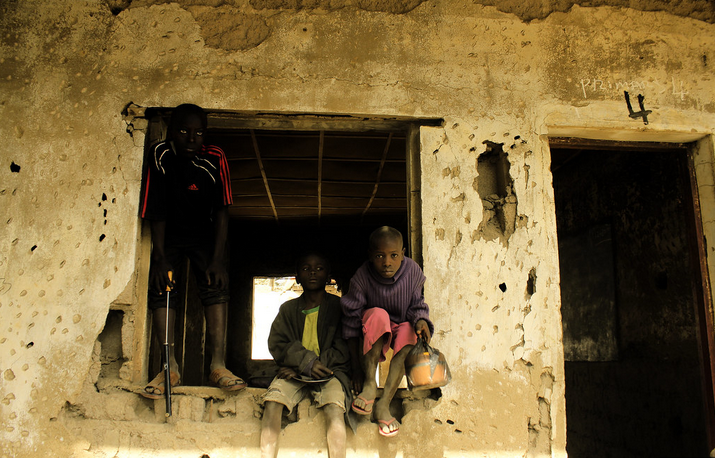
International Journal of Tropical Disease & Health 45(10):18-32. https://doi.org/10.9734/ijtdh/2024/v45i101595. Image credit: Immanuel Afolabi for the Center on Conflict and Development (ConDev) at Texas A&M University via Flickr (CC BY-NC-ND 2.0)
- Log in to post comments