










































Using Radio for Budget Advocacy: Stories from Azerbaijan, Guatemala, Georgia, Indonesia, Kenya, and Uganda

This article, published in the International Budget Partnership's bimonthly newsletter (Volume 39, May-June 2007), describes civil society organisation efforts to use radio as part of larger budget advocacy and budget literacy efforts by civil society groups in Azerbaijan, Guatemala, Georgia, Indonesia, Kenya, and Uganda. The article states that radio has been effective in disseminating budget information, raising awareness on budget issues, and delivering specific advocacy messages to particular populations where lack of literacy and of television transmission are issues. "[R]adio offers a space to talk about public finance or budget issues in a more casual way, without intimidating budget documents filled with charts and data. For many [non-governmental organisations] NGOs, the use of simple language to discuss public policy issues has been a powerful tool to raise awareness among citizens about their right to question particular uses of public funds and demand accountability from public institutions....Listeners have an opportunity to ask questions and present their concerns, while officials have an opportunity to provide answers. Building trust and effective communication between citizens and their government helps the government understand citizens’ needs - and helps citizens understand how government manages public priorities."
Recommendations include: "When using radio in an advocacy campaign, NGOs should select a radio station with the right coverage and profile, find a strong partner to support the program financially, develop an attractive agenda and schedule, invite interesting speakers, and air the program when the intended audience is most likely to be listening. In addition, a group can further promote an advocacy campaign by combining radio programs with the distribution of leaflets, publication of articles, and/or appearances in television shows." They are followed by case studies from Niger, Azerbaijan, Guatemala, Georgia, Indonesia, Kenya, and Uganda, which include some of the following strategies:
Niger - The radio station chosen for the advocacy project of a programme known as 'Public Debates' - whose goal was influencing the municipal policies of Niamey and improving the access to basic social services (health, education, access to drinking water) in disadvantaged neighbourhoods - already had a substantial audience of women and youth. The project installs a studio in the neighbourhood and invites the public to discuss a specific topic.
Guatemala - An alliance of the Ministry of Planning, the Guatemalan Institute for Radiophonic Schools (IGER), and the Development Foundation for Central America to expand citizen participation in public finance issues resulted in a radio guide to the new development law aimed primarily at municipal and community councils and stemming from a social pact on participation resulting from the peace accords of 1996. This idea evolved into a distance learning programme that integrates a textbook, tutor, and lessons over the radio. “Hands That Plow,” a 30-minute class offered three times a week, covers three modules: community development councils, participatory planning, and participatory budgeting. The Chamber of Commerce in Guatemala reports that "it has narrowed the communication gap between municipal authorities and community organizations, shown that budget and economic issues are neither 'elitist' nor 'urban,' and awakened citizens' desire to promote social accountability and demand accountability from public institutions."
Contact: Mayra Palencia Prado at mayrapalencia@gmail.com or IGER at igerproyectos@intelnett.com
Indonesia - To further its goal of advancing budget transparency, the Bandung Institute of Governance Studies (BIGS) made budget issues the main focus of a joint weekly radio programme presented by a private FM station. Broadcasts covered themes like education, health, small businesses, infrastructure, social security, taxation, and transportation. BIGS also inserted announcements promoting budget transparency into the programme. As stated here, "the program raised public awareness of budget issues, prompting six or seven calls every show. In addition, newspapers, magazines, and radio and television programs started covering budget issues." However, the programme was cancelled due to a change of management, highlighting the need to partner with a station that is comfortable with programming discussion of issues.
Contact Alwin Khafidhoh at bigs@bdg.centrin.net.id
Georgia - A Georgian radio station launched a weekly programme now called "The Georgian Government Listens to You" on which different government ministers are invited to appear and discuss public reforms, including budgetary policies. Citizens are able to participate by calling during the show or by sending questions beforehand via the internet or SMS (Short Message Service). The broadcast will also be available live on the internet.
Contact Tamuna Kaldani at kaldani@osgf.ge
Azerbaijan - As stated here, one of the aims of the National Budget Group (NBG), based in Azerbaijan, is to popularise budget issues. NBG has strengthened its relations with printed media, which is a useful way to reach experts and policymakers. "A ...Radio Liberty program was devoted to NBG's analysis of the implementation of the 2006 budget and the amendments adopted for the 2007 budget. While NBG also mailed copies of its analysis to government officials and received coverage in the print media, it was the radio program that spread NBG's message most effectively. Programs like this succeed because they use simple language, are addressed to ordinary people, are relevant to everyday issues important to the general public, and empower people to claim their rights over how public funds are spent."
Contact Fidan Najafova at fnajafova@osi-az.org
Kenya - The Institute of Economic Affairs (IEA) in Kenya conducted training for journalists in public finance and trade so they could capture budget information correctly.
Contact Institute of Economic Affairs (IEA) at admin@ieakenya.or.ke
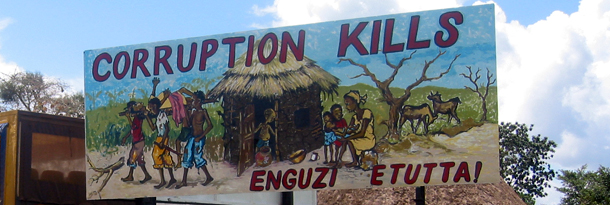
Uganda - The Uganda Debt Network (UDN) has established connections with government officials, activists, and media outlets, in particular, the local radio stations that broadcast programmes linked to UDN’s budget monitoring. A goal of UDN is to provide national-level visibility to the community monitoring committees it initiated to track problems in local implementation of government development projects. It helped establish the Anti-Corruption Coalition of Uganda (ACCU), which sponsors an annual “anti-corruption week,” during which it organises phone-in radio talk shows on corruption issues, broadcasts television programmes on how corruption can be eliminated, and organises participatory anti-corruption events such as art exhibitions, essay competitions, and public rallies.
Contact Anti-Corruption Coalition of Uganda (ACCU) at ACCU website
The Africa Budget Project has produced short audio spots focusing on successful applied budget work in Africa.
Click here and then click on the contact link at the bottom of the page to contact the Africa Budget Project.
International Budget Partnership website, Bimonthly No. 39, Newsletter, May - June 2007; and ACCU website, April 19 2010.
- Log in to post comments