










































Impact Assessment of East African Community Media Project 2000 - 2006: Report from Radio Mang'elete, Kenya, and Selected Communities

This 58-page report is the result of an impact study commissioned by the Division for Culture and Media with the Swedish International Development Agency (Sida). It comprises one of three separate impact studies of three community radio stations supported by Sida via the East African Community Media Project (EACMP). The objective of the study was to identify the "most significant change" in the community served by Radio Mang'elete in Kenya.
The EACMP is a sub-regional initiative involving 4 partners in Kenya, Tanzania, and Uganda, which has developed 3 community-owned and -managed radio stations. The project aims to strengthen the capacity of the involved communities to formulate, articulate, and implement their development agendas; to provide a means of accessing information in a timely and strategic manner; and to develop the capacity of radio stations to maintain high-quality broadcasting standards, be of high integrity, and engage the listening public in professional programming.
This impact study documents how the Akamba people of Kenya, living within the area covered by the station, have experienced positive development changes and empowerment since the start of the radio station. According to the report, the radio is not the communication tool of an overall development organisation as originally intended, but is functioning on its own and in its own right as a tool for development and empowerment.
The report identifies 4 areas where the "most significant changes" have taken place. These are:
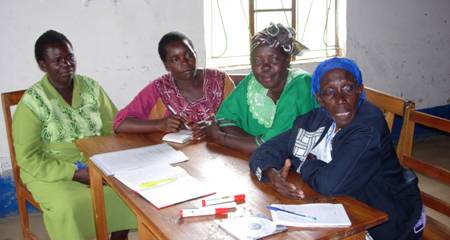
- Social and economic equality of women and ability to "voice" issues and concerns - The station has provided role models and recognition of women's issues, and programmes about rarely discussed issues such as violence and abuse have led to a decrease in domestic violence and an increase in girls' participation in school.
- Improved information and communication which has led to improved awareness - The station involves the community in programming and is seen as a reliable source of information, and has led to improved health around diseases such as malaria, cholera, and HIV/AIDS.
- Poverty reduction - The station provides important information about agriculture in the area, including information on seasons for planting, forecasts for rain and drought, knowledge about seeds and crops which are likely to be in demand, prevailing market prices, etc. It also provides practical knowledge about trading and doing business. This information helps community members make informed agricultural and business decisions.
- Governance and transparency - Since the station is community-owned and -managed, community members now have the power to ask local, regional, or national leaders questions, and to demand accountability for their decisions and actions. The report states that the radio station has become a tool to expose bad practices and empower members of the community to demand justice.
The report also looked at 3 aspects of sustainability - social, institutional, and financial - and questioned how it is that the radio station, its producers, and the organisation around them caused these changes. According to the report, the programme schedule is developed to respond to the needs of the community, is updated when a need is identified, and involves a great deal of interaction with the community. However, it does not have any routines, methodologies, or policies to ensure that all of the many populations within the community of listeners are being heard, and little is done to reach out to those most marginalised. Producers feel they have a great responsibility to the community to provide high-quality content and accurate information, and that being part of the station is an important part their own learning and development. In addition, most listeners generally feel that their information needs are being met by the station.
The report also includes a number of recommendations focusing on changes in the community caused by the radio station, and, to a lesser extent, the sustainability aspects of the station. These fall under several categories: ensuring continuation of the overall development framework of the EACMP; further promoting the social sustainability aspects of the radio; strengthening institutional sustainability; and enhancing financial sustainability.
Communication for Social Change website on April 17 2009 and May 12 2010.
Comments

the radio can bring change
the radio can bring change in society
- Log in to post comments