










































The Team: Kenya - Midterm Evaluation Results

University for Peace
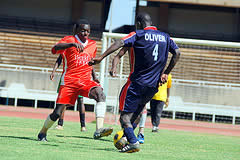
This is a midterm evaluation of a television and radio drama series, The Team, which was produced in response to the post-election violence in Kenya in December 2007. Developed and produced by Search for Common Ground (SFCG) and Media Focus on Africa (MFA), this episodic series asks a central question: Can Kenyans find a way to put the past behind them in order to have a better future? Members of the fictional football team, Imani (Faith) Football Club, who represent major ethnic groups or social classes in Kenya, are brought together and challenged to overcome their fears and biases against one another so that they can see one another as individuals and not as members of "the other".
The project was designed based on the assumption that popular culture can have an impact in changing mass attitudes. A range of key issues were identified that provide a source of conflict within Kenyan society, many of which have direct links to poor governance. Developed in the months that followed the post-election violence, the series is intended to be a metaphor about Kenyan society. Themes include ethnic tolerance and retribution, land disputes, mob violence and police impunity, gender violence, corruption and bribery, economic and social inequalities, and youth unemployment. Messages were explicitly crafted to challenge citizens at all levels of society to take responsibility for improving their lives and the lives of their fellow citizens through positive engagement with one another. Officials at all levels are encouraged to engage with and respond to the needs of their constituents, and citizens are encouraged to understand not only their rights but also their responsibilities in creating positive change for Kenya. Thus, the main goal of the series is to change the relationship between citizens and their government from one of strife to one of cooperation.
In January and February 2010, the University for Peace (UPEACE) conducted a midterm evaluation to assess the effectiveness and emerging impact of The Team and the multi-dimensional approach implemented by the producers. The results were assessed against a baseline study, which was conducted in April 2009 prior to airing the drama on television.
Key Results:
Reach
A central objective of the television and radio series was to reach a mass audience and, in particular, to influence the attitudes of those aged 15-35 years. Findings showed that:
- The Team was rated among the most popular shows on Citizen TV, with a viewership of 2.8 million, which translates to a 25 ratings share. Citizen TV is the highest rated broadcaster in Kenya, with 74% of the viewing audience tuning in.
- In addition, the episodes on radio Jambo had a listenership of 270,000 Kenyans. Young males aged 15-35 years - the intended demographic audience - was the largest listenership.
- Almost three-quarters of respondents reported that they watched or listened to The Team (73.1%).
- Almost 40% of respondents reported that they watched all 13 episodes of the first season.
Effectiveness in addressing the themes
Survey participants were asked to rate the extent of media coverage for 15 issues that were addressed in The Team. The second part of the question evaluated the effectiveness of the media coverage regarding these themes. In the baseline study, questions were directed at the media coverage of the themes, while midterm evaluation questions related specifically to The Team's coverage of the same issues. According to the findings, participant perceptions of The Team's media coverage surrounding these issues were overwhelmingly positive in comparison to other local Kenyan drama coverage; for 13 of the 15 identified issues, results were statistically significant - indicating higher scores in the midterm evaluation. Similarly, survey participants perceived The Team's media coverage of virtually all issues as being more effective than that by other local Kenyan drama; responses from the midterm survey showed higher levels of effectiveness than ratings received in the baseline survey for the rest of the media. Key findings include:
- Survey participants were able to identify tribalism/tribal differences as a main issue addressed in The Team, followed by tribalism, corruption, gender equality, teamwork, drugs, and alcohol abuse.
- Almost two-thirds of respondents said that these issues affected them "very much" (64.2%).
- Almost all respondents said that The Team was effective in addressing these issues (97.7%). Just under a third stated that The Team was "very effective" in the way that they were addressed (29.2%).
Outreach Activities: Discussion Groups via Mobile Cinema Screenings
The discussion groups that follow mobile cinema screenings have been an integral part of the project. Since its inception, The Team as a project relied on mobile cinema screenings as a catalyst for discussions that would inspire viewers from different tribes to take positive action among and between one another. The screenings were conducted in the locations that saw the most violence after the election. In order to assess their effectiveness, the researchers conducted focus groups with participants in all seven locations. Key findings include:
- The screenings changed the attitudes of many who participated in the screenings; many reported being more open and accepting of others, particularly from other tribes. The sharing of experiences and ideas through discussion after the screening by the diverse group of participants, both in terms of gender and tribes, proved to be an essential aspect of the mobile cinema screenings because this type of public forum is rarely seen in these communities.
- Almost all focus group participants stated that it gave participants the opportunity to learn from the experiences of others and come together to form a team with people of both genders and from different tribes, as well as among people affected by violence, perpetrators of violence, and witnesses.
- The mobile screenings were important in reaching a wide spectrum of people in remote areas without access to television.
- Participants reported that the screenings were entertaining and that they provided participants with an important opportunity to socialise.
- Participants reported that the screenings and subsequent discussions helped them develop individual confidence and self-discipline and learn how to accept responsibility for their own actions.
- Most importantly, a change in attitude was acquired from the screening sessions; many reported being more open to and accepting of others, particularly from other tribes. The report offers an example of a criminal gang with members from different tribes in Kibera slum who turned on each other during the post-election violence. However, after watching The Team, they decided to transform their lives and are now working together and involved in a range of entrepreneurial activities.
- Finally, some participants articulated an increased interest in local programming (such as cultural events) as a result of the mobile cinema screening.
Cases of Action and Transformation
The objectives of The Team project focused on affecting change among and between citizens, civil society organisations, and government agencies with regards to governance and the rule of law. The evaluation identified several cases where citizens demonstrated how they changed and/or transformed their actions and behaviours as a result of, or with the contribution of, The Team.
In conclusion, the results of the midterm evaluation showed that The Team drama succeeded in addressing key issues of importance to Kenyans, such as tribalism, corruption, youth isolation, mob violence, rape, police, and impunity. According to the report, this success was due to many factors. First, The Team used a platform - a football team - with which people can identify and relate to. Second, it portrayed real-life situations that resonated deeply with the average Kenyan. Third, it addressed issues that have preoccupied Kenyans since the post-election violence in powerful ways. Fourth, it provided realistic and appropriate approaches to addressing these issues.
To request a copy of the full evaluation, please see the contact details below.
Email from Deborah Jones to Soul Beat Africa on May 3 2010; and the SFCG website on September 2 2010 and October 26 2010.
- Log in to post comments