










































Assessment of Segmentation and Targeted Counseling on Family Planning Quality of Care and Client Satisfaction: A Facility-based Survey of Clients in Niger
University of North Carolina at Chapel Hill (Speizer, Winston, Maytan-Joneydi, Calhoun); Grade Africa (Amani, Garba, Halidou, Nouhou)
"This type of targeted counseling could improve the quality of services offered and ideally lead to increased contraceptive use in Niger."
In Niger, there are high fertility desires, and contraceptive use is not a normative behaviour. To address the challenges that lead to low use of contraception in Niger, many initiatives have focused on improving the quality of family planning (FP) services. Particularly in resource-constrained settings, segmentation, or the division of a population into subgroups based on shared defining characteristics, can aid policymakers and programmes to focus on the most receptive segments within a population. This study examines a client segmentation counseling tool developed by Camber Collective and implemented by Pathfinder International. It assesses the quality of services and the level of client satisfaction with FP services received as reported by clients in sites where the segmentation tool was implemented.
In 2014, Camber Collective undertook a nationally representative survey of over 2,000 women aged 15-49 in Niger. The data from this survey were segmented by five key factors: contraceptive use behaviours, proactivity, social norms, contraceptive attributes, and attitudes and beliefs. The analysis yielded five segments: Healthy Proactives, Traditional Autonomists, Sheltered Skeptics, Modern Elites, and Conservative Passives. Certain segments are likely the innovators (e.g., Modern Elites and Heathy Proactives), whereas others still want many children and are likely to be resistant to contraceptive use (Traditional Autonomists and Sheltered Skeptics). Camber Collective developed a segmentation counseling tool and different counseling cards specific to each of the five segments.
The client segmentation tool guides providers to ask 12 questions to determine which of the five segments a client falls into. Providers then use counseling cards to tailor FP counseling to clients based on their identified segment. The counseling cards outline potential attitudes towards and concerns with FP, points to be discussed with clients, messages that are likely to resonate with clients, and types of methods clients may be more likely to accept.
Pathfinder International introduced segmentation into Dosso region of Niger in two phases. First, Pathfinder International incorporated segmentation into facilities participating in their Reaching Married Adolescents (RMA) project, which seeks to address demand-side factors for FP among married adolescents. Pathfinder trained one provider in each study area health facility to use the counseling tool and counseling cards through a five-day training. Second, in a subset of facilities without RMA, Pathfinder International incorporated the segmentation tool and counseling cards and provided a training for providers.
This study uses recently collected client exit interview data from 2,720 clients, comparing three scenarios: (i) 15 facilities where segmentation counseling was implemented since 2017 (Arm 1); (ii) 15 facilities where segmentation counseling began in late 2019 (Arm 2); and (iii) 15 facilities without segmentation counseling (Arm 3). (Because the RMA project was a community-based demand creation project, the study team determined that it was important to have a non-RMA arm with segmentation (Arm 2), in case people in the RMA sites have higher expectations for FP services that would bias the results on quality and satisfaction.) Bivariate and multivariate analyses were undertaken to determine if there are differences in quality of services and client satisfaction between the facility groups and between clients that were segmented and those who were not segmented in the first two scenarios.
Examining the quality indicators first, the study finds that that clients from Arm 1 are significantly more likely to report they were given information about different methods than clients in Arms 2 and 3. A significantly greater percentage of clients in Arm 1 report they were asked about their preference for a method than in Arms 2 and 3. In addition, a significantly greater percentage of clients receiving a method in Arm 1 report that the provider gave full information on the method selected during their interaction.
For three of the quality indicators (receiving information about different methods, being shown the demonstration kit, and receiving full information about the selected method), clients who were segmented report better quality of services than clients who were not segmented; this is true in both Arm 1 and Arm 2. Only in Arm 2 were segmented clients significantly more likely to be asked about their method preference than non-segmented clients. As expected, segmented clients have significantly higher quality scores than non-segmented clients.
Results also demonstrate that clients in facilities implementing segmentation longer reported higher-quality services than the recent segmentation facilities. New clients reported higher-quality services than returning clients, and, among new clients, those who were segmented also reported higher-quality services. No differences were found in client satisfaction between facility scenarios or between segmented and non-segmented clients.
In qualitative results from in-depth interviews with providers from facilities where segmentation is underway, providers felt that the segmentation tool and counseling cards lead to them spending more time with clients and the clients feeling more informed and comfortable with their method at the end of their FP visit.
All that said, descriptive results from this study demonstrate continued gaps in service provision in the study sites. While more than three-quarters of women were asked their preference for a method, less than half were provided with complete information on the method they received. Also, less than half of clients report they were "very satisfied" with services, and less than half report they were treated "very well" by the provider.
In conclusion: "This study is timely since the Government of Niger is considering scaling-up the segmentation approach nationally....To support scale-up, it is important to identify ways to make segmentation part of the standard of practice and part of routine supervision....Improving quality of services is no easy task but the Government of Niger should make it a priority through this segmentation approach or another approach that strengthens provider skills and supports continued targeted services to meet all client needs."
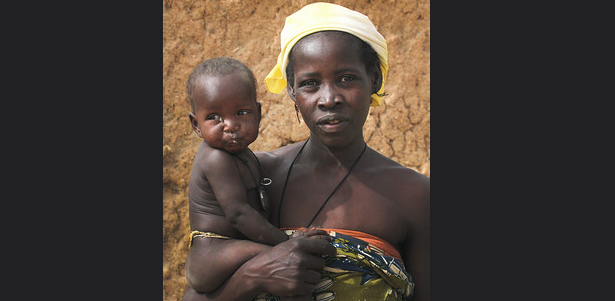
BMC Health Services Research (2021) 21:1075. https://doi.org/10.1186/s12913-021-07066-z. Image credit: Steve Evans via Flickr (CC BY-NC 2.0)
- Log in to post comments