










































Impact Data - Tipping Point Nepal
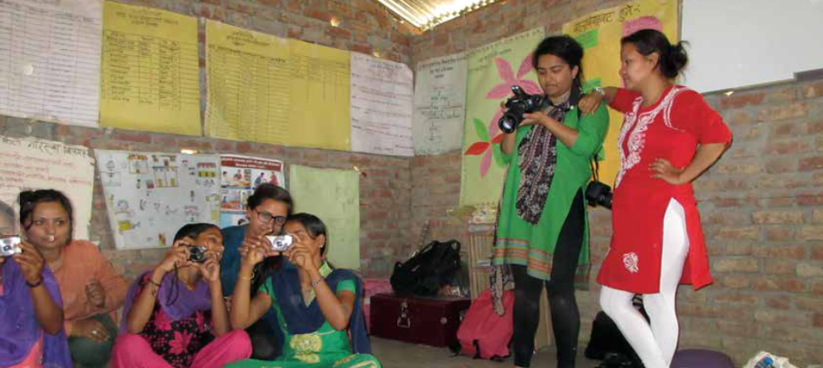
"I learned to talk from this club. After I participated in this program, I gained confidence to talk with my father [, who] was also one of the participants of this club." (Adolescent girl, Rupandehi, TPP or TPP+)
CARE's Tipping Point Initiative (TPI), detailed at Related Summaries, below, facilitates shifts in inequitable gender and social norms, enabling adolescent girls to build and practice skills, enhance supportive relationships around them, and challenge the underlying causes of child, early, and forced marriage (CEFM) in their communities. Core participant groups - adolescent girls, adolescent boys, and parents - are engaged in dialogues around 4 programmatic pillars: increasing sexual and reproductive health (SRH) knowledge and access, facilitating social norms change, supporting girl-led movement building, and expanding access to alternatives to marriage. In addition, TPI supports the creation of public spaces for all community members to engage in dialogue.
Coordinated by CARE and led by research partners Emory University with Interdisciplinary Analysts (IDA), the Nepal TPI impact evaluation had an integrated, mixed-methods design. The quantitative evaluation was a cluster randomised controlled trial (CRCT) with 3 study arms: control; Tipping Point Program (TPP); and the Tipping Point Plus Program (TPP+), which emphasised social norms change. Fifty-four clusters of about 200 households were selected from Kapilvastu and Rupandehi districts (27:27), with probability proportional to size and randomised evenly across study arms. Endline participation involved 1,124 girls, 1,143 boys, 265 women, and 266 men. The qualitative evaluation involved data collection with adolescent girls, adolescent boys, parents of adolescents, and community stakeholders in 8 TPP/TPP+ clusters.
TPP+ significantly increased SRH knowledge (by 22%) when compared to the control arm when adjusting for potential confounders like age, literacy, grades completed, household religion, caste, other (non-TPI) empowerment organisations attended.
At follow-up, less than 4% of surveyed girls were married, including in the control arm. There was no effect of TPP+ or TPP on the risk of marriage among girls.
Even in the context of COVID-19 lockdowns, TPP girls' mobility scores jumped 5% at endline, while TPP+ girls' scores increased on average 7.2% from baseline. When compared to the control group, TPP+ girls' freedom of movement was much greater than the control, but the spread in girls' scores in this was large and thus not statistically significant.
Gender attitudes related to women's and men's roles significantly improved across arms for girls, with scores increasing 15% for TPP and 13% for TPP+. Girls put this knowledge into action outside of their groups as well: Adolescents described advocating with their parents for a more equitable division of labour in their households. That said, gender discrimination in family as perceived by girls in the TPP and TPP+ arms actually increased compared to the control. Research partners hypothesise that this is likely due to increased awareness of participants related to gender roles and expectations.
When compared to the control, TPP+ showed impact on aspirations about marriage and education, though this was not statistically significant due to the wide variation in girls' scores.
There were significant increases in communication and negotiation with parents, and participation in decision-making. The more favourable outcomes observed in girls who reported greater participation in programme activities by fathers, as well as qualitative findings suggesting the continued primacy of fathers in decision-making around marriage, underscore the importance of engaging men and boys in programming that seeks to facilitate broad changes in social norms.
Significant increases were observed from baseline to follow-up for 10 of 15 secondary outcomes related to girls' intrinsic, instrumental, and collective agency; network social norms; and perceptions of discrimination in the family. Significant increases from baseline to follow-up also were observed for adolescent boys for all 11 secondary outcomes related to aspects of their intrinsic, instrumental, and collective agency.
For measures of collective agency, mean scores for group membership and participation in events increased significantly over the study period; however, mean scores for cohesion, solidarity, and mobilisation skills did not change. When comparing to the control arm, group membership was most strongly impacted, and even without being statistically significant, all other measures also showed impact.
Community gender norms among adults increased over the study period to reflect greater endorsement of more gender-equitable norms. These changes align with perceptions of community members in the qualitative data.
"Understanding the Impact of Addressing Root Causes of Child Marriage" [Tipping Point Global Impact Evaluation Summary], by Anne Sprinkel, Rajan Subedi, and Mahmud Khan, and "Year 9 | Impact Evaluation Fact Sheet: Findings from Kapilvastu and Rupandehi Districts, Nepal, 2019-2022" [Impact Evaluation Summary of Tipping Point Nepal, by Robert Durr, Cari Jo Clark, and Kathryn M. Yount - both accessed on February 9 2023 and sourced from emails from Beth Sorel and Alessia Radice to The Communication Initiative on January 30 2023 and February 3 2023, respectively. Image credit: CARE
- Log in to post comments