










































Trust Analytical Framework
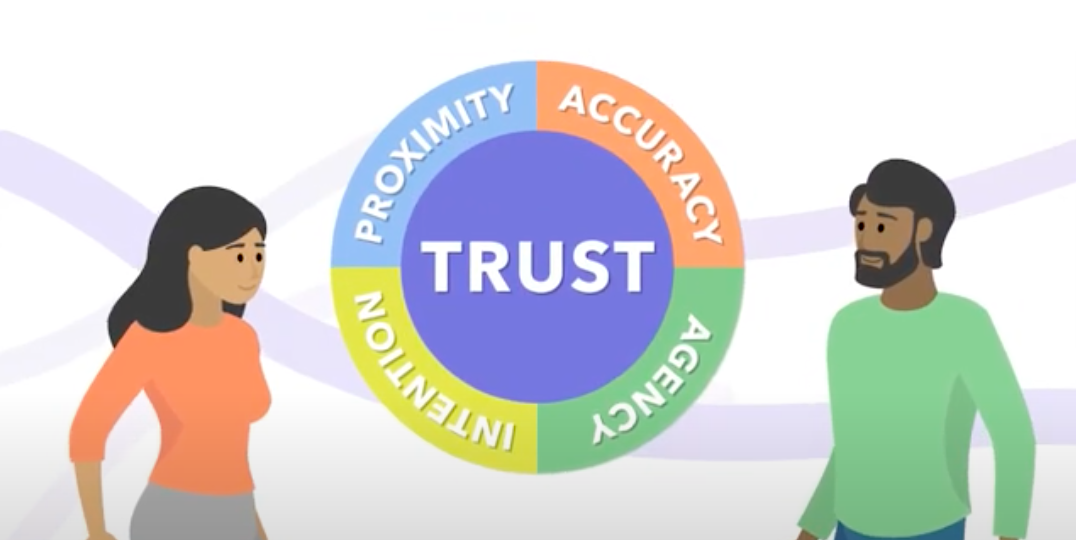
"...no matter how factual and relevant your information is, these efforts are futile if the information is not trusted, and is rejected."
This Trust Analytical Framework seeks to help communicators understand the building blocks of trust, why facts are sometimes distrusted, and why rumours are sometimes believed. The framework breaks trust down into 4 core elements, each with 3 sub-elements that seek to help communicators understand why people believe information and the organisations distributing the information.
As Internews explains, "Trust has become more and more the focus of a lot of research, including in media and in the humanitarian sector. Like a holy grail, agencies and journalists chase it, bank on it, cherish or assume it. However, “it” is hard to define, hard to plan for and even harder to measure. Yet, everyone seems to agree it’s important if not crucial to make sure information is not ignored and services are not rejected."
The framework is based on the work of Internews' Rooted in Trust project, which works to build local networks in communities dealing with humanitarian crises to provide a locally relevant and reliable alternative to mis- and disinformation. (See Related Summaries below for more information). Based on focus group discussions, online data collection, and key informant interviews across 10 different countries and contexts, the Internews teams around the world started seeing patterns in why certain information and certain information providers were more or less trusted. These reasons were clustered and reduced to the 4 elements (accuracy, proximity, intention, and control) and their 3 sub-elements. For example, for accuracy, the 3 sub-elements are: contextual, factual, and timely.
The Trust Framework can be used in different ways:
- It provides a more nuanced language that can help inform the conversation and further research around trust, beyond the binary approach of "it" being there or not.
- It can help as an analytical framework to understand better the data coming out of the numerous audience/user/client surveys and assessments that are implemented to get smarter about the communities, contexts, or countries organisations are working in.
- It hopefully helps not just to "understand" but also to improve the way projects are designed, content is created, and impact is assessed - so as to evaluate the dynamic relationship between organisations and the reasons why people like, share, or reject their information.
For each of the 4 elements, the Framework offers questions that can be asked to help with analysing, monitoring, planning, and assessing communication activities. The framework also operates on the principle that the goal of information providers is not blind trust. High-quality information benefits from being subject to constructive scrutiny, and information providers should be open to questions and be genuinely accountable to their audiences.
Linked to the framework is a toolkit with questionnaires designed to help with the analysis, design, monitoring, or evaluation of information-related work. For more information, please contact Internews.
Publishers
Rooted in Trust website and Internews website, both accessed on September 8 2023. Image credit: Internews
- Log in to post comments